No New Notifications

Kes' Sweet Ride

The rise and rise of the artist to be forever known as Kes.

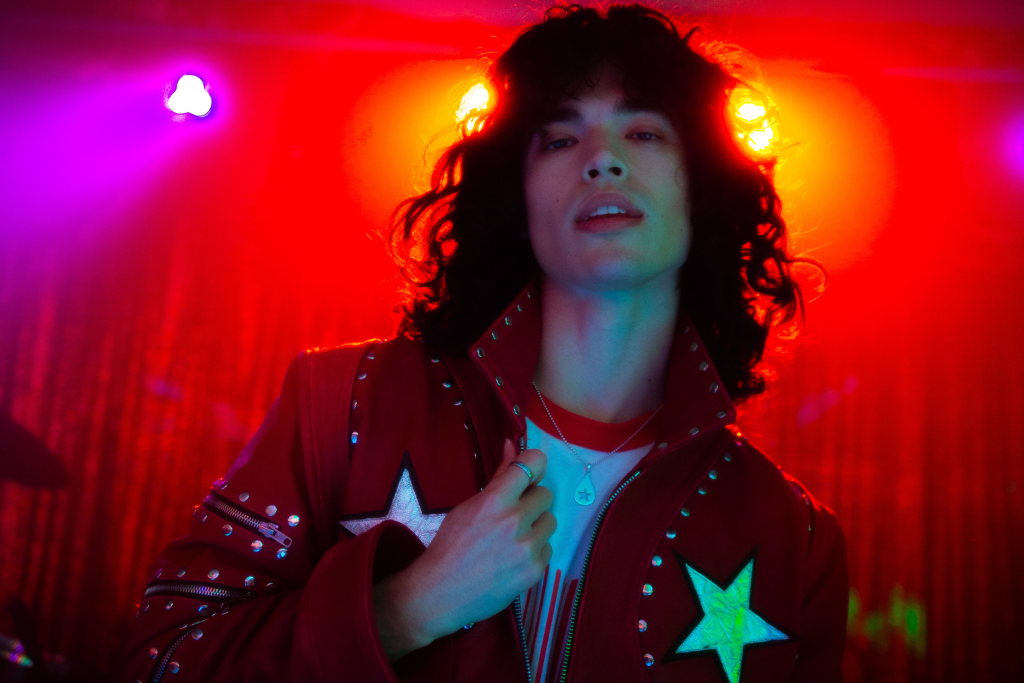
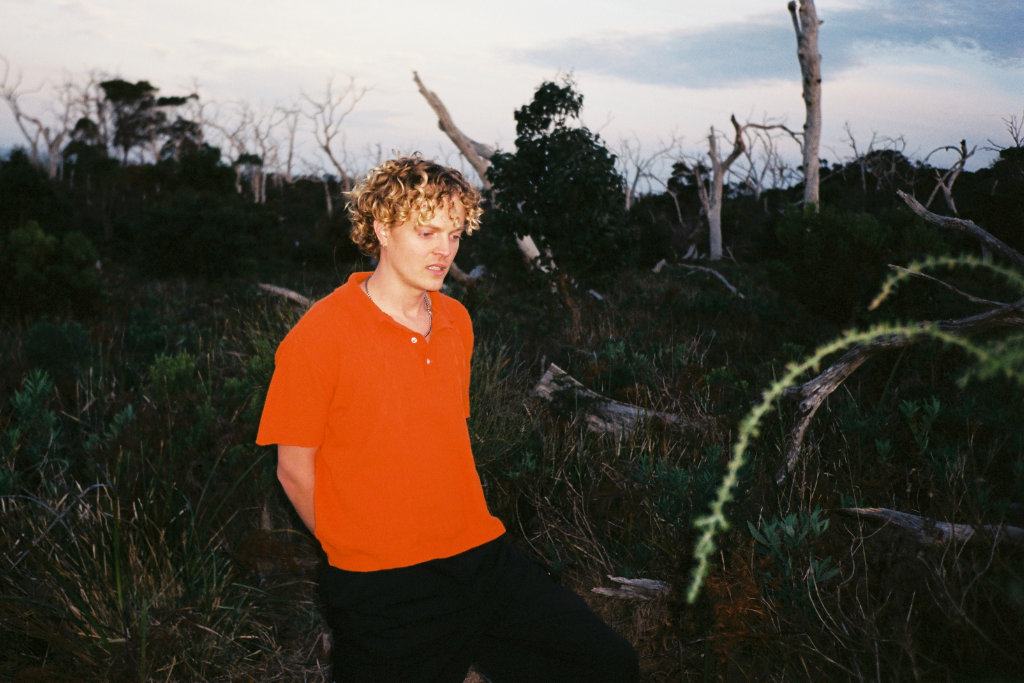
Karl E. Scullin – spells Kes – is a man growing in confidence. You might not guess it from his slight frame, gentle presence and slightly anxious demeanour, but see the guy on stage and it’s apparent: the odd, thin voice he projects is unrestrained, his guitar playing drifts into an unabashed assault – long slender fingers wrapping around the neck and squeezing out angular solos, always comfortably lost in the little tangled worlds he conjures.

See him in the studio, too, and you’ll find an artist at a creative summit. New songs with his band reveal stunning arrangements where instruments effortlessly curl around each other, like slumbering lovers – voices come in and out, clarinet notes sidle up to the lead guitars. The structures are complex but delivered with the clarity of an uncluttered mind; Karl’s notebook is etched with ideas, revisions, new sections, new songs, new lyrics.

On a quiet Wednesday in April, he’s at the house of James Cecil, engineer and producer of what is to be the next Kes release. Over camomile tea, Karl is revisiting and tweaking songs that were begun in this back-room studio some four months ago. Cecil, a member of Architecture of Helsinki and sometime remixer, is doing this for the love and for a relatively tiny sum of money.

“This album is really awesome,” Karl says. “There’s been no time limit with James, he just wants to do the best album we can together. He’s an amazing artist and engineer himself,” he gushes, before adding, “everyone I have worked with has been awesome.”

One of Karl’s present bandmates, Laura Jean, is in the studio too. She (“Jeanitron”) wanders in and greets Karl affectionately, then they get down to sparring like siblings. James retains a warm but workmanlike focus on the glowing Pro Tools window before him; Kes has a list of things he’d like tweaked and changed, but the novel action – two other people in the studio – is distracting. He’s at once focussed and playful, posing for the camera and then returning to his notebook, uttering a gratified “sweet ride” when something is fixed. (In Kesland, it seems “sweet ride” is Karl’s verbal thumbs up, while “sweet rides” is a greeting for good people).

Over a two hour stretch in the studio, Laura Jean records some handclaps and then heads home. But not before hearing some of the new elements Karl and James have added to the grandest and most assured Kes record yet. The clarinet parts, performed by Martin Mackerras from Laura’s band, are particularly intoxicating and ushers silence into the otherwise chatty studio. To untrained ears, the song is more than finished, but there are evidently more late nights ahead.

“I’m all about recording,” Karl declares. “[At a gig,] people could be laughing at me and throwing rotten fruit, and I’d go home and work on recording, that’s the important thing. I just finished reading this book called Good Vibrations which is the history of production. It’s such an awesome and inspiring read. I’m really into production now. I think I’d really like to work with someone and work as a producer and listen to songs and think about arrangements.”

This growing interest in the alchemy of production can be heard across the Kes recordings. The progression from the first album, Jelly’s in the Pot – and the prior EPs – to what is being produced now is fairly clear, Karl says: it’s the same, but with better friends to call on and more ideas circulating.

“With Pot, people thought I was going after sparse instrumentation, but I just did what I could. I tried to be dynamic with song structures. They’re very minimal and small, whereas now it’s definitely getting bigger.”

The changes are also the outcome of choosing to work with different people for each set of sessions. After recording the EPs with Neil Thomason, the first LP was done by Simon Grounds – mythic Melbourne engineer – and the second LP in the nostalgic surrounds of the all-analogue Melbourne Recording Salon. For this third, Karl is working in the all-computer land of Cecil, meaning it’s a comfortable challenge to Karl’s organic leanings.

“James really lives in the present time,” Karl says, “he knows all about Pro Tools. It’s inspiring. I’ve always had a living-in-the-past, acoustic-guitar vibe, whereas he’s got a cutting-edge vibe.”

Although, for Karl, this isn’t necessarily what’s at the base of making a bolder record – it’s Cecil’s ideas and how he channels them through that technology. “If you’re working with people who you have a vibe with, and they’re on the project, I just want to record on a boom box cassette player,” he says, before trailing off. “Fidelity, as much as I’m obsessed with it now – it doesn’t matter. I’ve got an organic vibe. I like keeping things simple – just guitars and voices. That’s just my vibe as a person. I guess I’m a little bit of a hippie.”

Soft voiced and thoughtful, organicism is definitely his ‘vibe’, but not to a belligerent, close-minded extent. The combination of Cecil and Karl’s powers is evident in the analogue synth they add to a new song on that Wednesday night.

“I’m willing to have a crack at doing that, especially for textures,” Karl later says of their electro adventures. “I love Brian Eno – I think his Music for Films is the most spiritual album ever. It’s very organic or pastoral. It reminds me of nature.”

Calling it organic, though, gets a little complex. The boundaries of that concept and whatever it opposes get a little blurred once usage starts slipping. Karl’s more than aware of this, but maintains the distinction.

“Everything comes from the earth from some level – I agree with that, but,” he says with a thoughtful pause, “it’s like Shintoism, where they respect the base nature. They make houses out of wood, incorporate things from the natural world in their life as much as possible. Mimicking the natural world and being integrated in it, there’s something more spiritual about that than eating a packet of Twisties and watching porno,” he adds with unarguable finality.

It’s this simple-life approach that makes all the more intriguing Karl’s history as the original bass player in the famously self-destructive Bird Blobs.

“I was really influenced by Tim Evans – not so much musically,” Karl says. “Sea Scouts were a pretty mythical band for me as teenager. I was living in Essendon – total clean suburbs – and I was hearing stories through high school friends about crazy guys in Geelong and Tasmania. I met Tim when Sea Scouts [Evans’ previous band] broke up and we became friends.”

“I feel like I was doing homework in Bird Blobs – I was happy to play bass or whatever, just to hang around with someone with a strong vibe, even though his attitude is totally opposite to mine: he’s totally about pussy and alcohol. It’s this really blokey thing. My thing is overly fragile – drinking water, that’s my vibe. But it’s definitely given me a weird kind of confidence. It’s good to get brutalised a bit, ‘cause you don’t get stressed out about things as much.”

Nevertheless, the time for being brutalised was finite, and the Kes project had begun in earnest around the same time. (Interestingly, though, a Kes album recorded with Tim Evans on drums was shelved…)

“As soon as Bird Blobs recorded Stihl Life, I knew that I had to get out. I couldn’t even go to the Tote anymore,” Karl says of feeling divorced from the band’s offstage life. “I didn’t drink alcohol, I just wanted to go home and watch cartoons. I only drink if something really good is going to happen – like if I make out with a girl. Drinking is just a shortcut to a vibe. But not drinking makes you feel like an outsider,” he says. As we sit. Sipping water. In the beer garden. At the Tote.

An hour earlier, Karl had been on stage, playing a solo set with an electric guitar. On stage, as we talk, is Rowland S. Howard, another enigmatic and self-destructive Melbourne musician courted by the delicate Karl.

“I was a roadie for Rowland in my early 20s and when I was really trying to get into music, just before I was in Bird Blobs. I used to watch Rage and the Nick Cave scene was obviously visible and really influential – not really for me, but it was close to home. I went to North Melbourne Town Hall Hotel to see Rowland play and Mick Harvey and Mick Turner were there. So I’d been watching Rage and then realised all these people were here in my town. I was definitely wowed by that. I was doing photography for Rowland and one of his albums shortly after. Every time he did a gig – he’d pawned all his gear – I had a [Fender] Jag and an amp, so I used to drive him; pick him up and take all this gear. I didn’t get anything out of it; he was totally on a sweet ride. Roland’s an eccentric character – he works on his own axis,” Karl says.

“This gig, tonight, it feels like I’m doing it now,” he adds, after a reflective pause. “I’m not just a sycophant, carrying his gear around. I’ve got my own vibe going. There’s some momentum happening.”

With the confidence built through years of being onstage and honing his songs, it’s much easier to hear the Bird Blobs – and Rowland and the years spent in pubs – in the very different lines of Kes songs. The ragged live thing is a different Kes experience to the one available on disc.

“I’ve always played electric guitar live,” Karl says of his Fender Jaguar, loop-pedal and amp set-up. “It just never works with an acoustic guitar. I’ve seen so many people die on stage with acoustic guitars. It just makes sense to me: electric guitars were made to play live; acoustic guitars are an in-your-bedroom, sensitive, play-to-your-girlfriend kind of thing.”

“I’d love to get an aggressive band together,” he says. “Something like a My Disco meets Captain Beefheart band – a really muscular kind of band. It’s a bit bizarre me doing that [looping] by myself, all those angular solos and stuff,” he says, before the dependence on technology scares him again. “It’s important not to rely on that loop stuff too much though.”

The mention of the My-Beefheart-Disco band is one of a few nods to hyper-productivity and creativity that Karl drops in our chat. He’s evidently frustrated, for one, by the commitment-phobia of certain musicians (“put your money where your mouth is,” he says of other artists). But also mentioned are his solo acoustic record and a possible ambient record. All of this, he says, will be issued under the Kes name.

“I feel like I have got a lot of songs in me, enough to keep it going like that. I’ve built enough steam now, it’s a good platform – people will come on board and then might leave. It might change to Kes Project or Kes Band 2.”

But this continuity is a lesson Karl has learnt from past mistakes. “I’ve been in bands where they keep changing names and no one knows who the band is anymore,” he explains. “Like Fleetwood Mac; I love that Fleetwood Mac is just the drummer now. I like bands that have heaps of line-up changes and keep going. There’s something really cool about that.”

It’s a curiosity that ties into one of Karl’s professed interests in pop music: the personality. “I’m really into personalities,” he says. “I get obsessed with personalities; I really dive in. [Fandom and stardom is] a big key in pop music.”

Personality is something he’s evidently cultivating for himself. Aside from the name continuity, the cover art, he says, will always be a simple photo on the front and handwriting on the back: the two album covers thus far, with their directorial photography and Karl as their abashed star, already lend him a cultish air.

He’s unlikely to change his tack, for the steam, as he says, has started to press hard against the lid. The boy’s about to boil over: in the week after we talk, his band Mum Smokes are slated for the prime Saturday night slot after Cat Power at the Dirty Three-curated All Tomorrow’s Parties festival; three weeks later, he plays solo with The Blow in London; four weeks later, he returns home to put the final, sparkling touches on a band and a solo record; five weeks later, he dashes up to Sydney to play the slightly belated launch for Grey Goose Wing, his last record.

There’s a lot going on, but just one person at the heart of it.

“If I have an acoustic guitar and something to record on,” Karl says, “I can keep doing what I’m doing. I don’t need people that much. I definitely want to always be that simple, that I can keep doing it whenever. I’ve always tried getting bands together – but you can be an amazing band and someone will go ‘I want to go back to uni’ or something. I’m in for the long haul. I’m into it. The Kes thing is always going to be there.”

+

  -   Published on Monday, May 21 2007 by Ben Gook.


Today On Mess+Noise
Related M+N Content