Sianna Lee: Rising From The Ashes
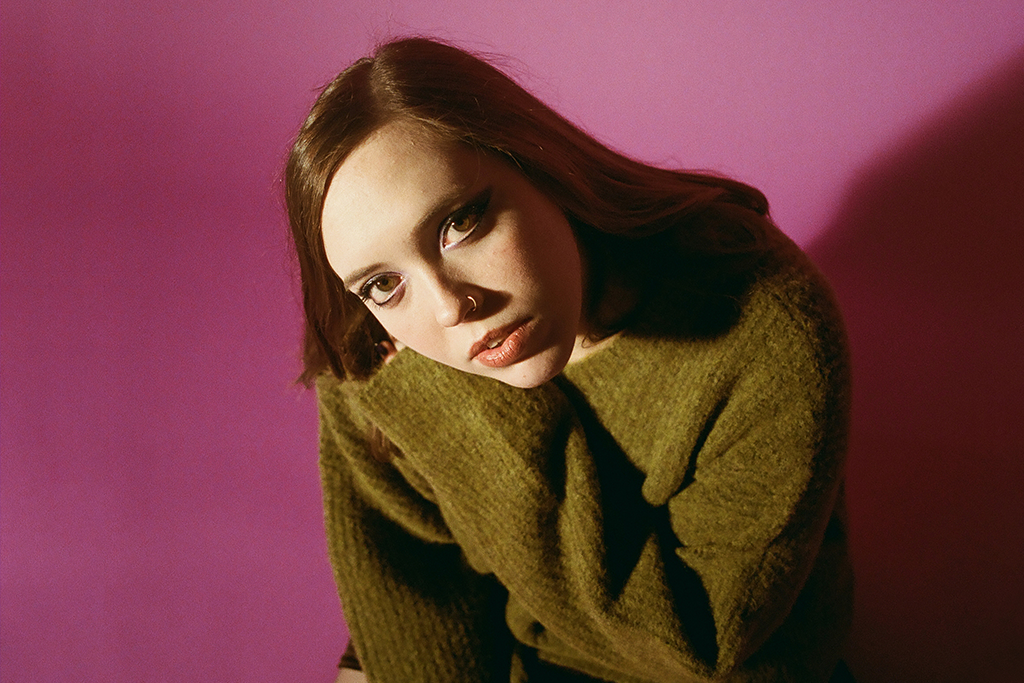
It’s been a difficult few years for former Love Outside Andromeda frontwoman Sianna Lee, but she’s marked her comeback with a defiant solo album, 'Phoenix Propeller'. She reveals the real reasons for her band’s break-up to CRAIG MATHIESON, and explains why putting out a solo record is comparable to scuba diving.
Sianna Lee wants to make something clear. “I’m used to crying while I speak,” explains the former frontwoman of Melbourne quartet Love Outside Andromeda. “If I’m truthful I often get emotional. It happens and I’m OK with that.”
Sitting in the front room of her Thornbury home, with a gas heater crackling and a vinyl edition of The Smith’s Strangeways, Here We Come propped up next to the turntable, Lee is beginning the second, and at times painfully unlikely, solo phase of her career. After a pair of records notable for their instrumental fury and lyrical fecundity, 2004’s Love Outside Andromeda and 2006’s Longing Was a Safe Place to Hide, her band went under with little explanation.
It wasn’t until the last few months, when the now 30-year-old announced a solo album, Phoenix Propeller, and began playing shows with a backing band – former L.O.A. members bassist Jesse Lee and guitarist Jamie Slocombe, joined by keyboardist Lara Soulio and drummer Paul Buynevic – that her exile ended. Released by Enchanted Recordings, Phoenix Propeller takes the fervour of her former band and extends it to unexpected spheres. It is in turn angry and ethereal, caring and compelling.
I haven’t spoken to you for four years. If there was a film of that period what kind of movie would it be and who would play you?
I don’t know who’d play me. It would be a pretty typical drama. It would start with a character in trouble and sad and lost. The character would have a go at thinking they’d like to have a real job and a normal life, letting the world they knew go. Then they’d return to it.
I last interviewed you just before Longing is a Safe Place to Hide came out – did Love Outside Andromeda tour that record?
The band ended the day before we were due to go to Adelaide on the album tour. It was an awful tour because I had to lie to everyone about how I was excited about the record. There was one interview, with this guy in Tassie, where I rambled on and for some reason I stayed on the line afterwards and I heard him say to someone, “What a load of fucking waffle that was.” I actually called him back and suggested that if he was so interesting the article should be about him about, and he was like, “I’m a fucking idiot, I’m sorry I said that, please don’t stop doing this because of me.”
And then the band stopped. He must have felt great.
He was right. I was rambling because I couldn’t tell the truth.
Does this mean you lied to me?
I can’t remember what I said. I probably made it sound better than it was.
What were you lying about?
I was burnt out. I wanted to take a break from music, but I was afraid. As soon as you have some notoriety everyone says you have to keep going and make hay touring. We put a song out before the album was finished to keep people interested, ‘Bound by Hurt Dissolved’, and that was the only song triple j liked. Because of the awful things that happened, with [producer] Tony Cohen and Shock and legal problems, the album didn’t get released until September of the following year. If they’d been released at the same time it may have been different, but then again the album probably would have reached the same conclusion.
“I don’t find playing solo hard. It’s kind of the same as scuba diving: I’ve only scuba dived once and I swam with a two-and-a-half metre grey nurse shark, but just because I’ve done that doesn’t make the next time any less scary.
What was the band’s problem with Tony Cohen?
He was just not up to working the same hours. He was sick and can’t do a full day. His management shouldn’t have contracted him to do the work that he was going to do.
Was he guilty about that?
No, he acted like a child. He’d be in a ball crying on the couch saying, “I just want to get paid”, at one point … He was very sick. His engineering wasn’t up to scratch, but everyone said his genius was in mixing, but when it came time he couldn’t do a full day. He was good for four hours a day.
Was the band in the right frame of mind to deal with that?
I think things are meant to be. I hate it when I’m in it and I think, “Fuck you”, to the powers that be, but when I look back I can really see the pattern. Everyone was great with the first album and it all worked out – the stars were aligned. Nothing worked out for the second album. Everything that could have gone wrong went wrong.
At that time you’d been involved with Joe Hammond, the drummer, for two years.
Neither us of intended to become a statistic, but bands break up because members become couples. The dynamic changed because it was very much Joe and I.
So you were in a band with your boyfriend, your brother [bassist Jesse Lee], and your best friend from high school [guitarist Jamie Slocombe]?
Jamie and I became quite distant, we weren’t friends anymore. Joe and I argued a lot before we were together over creative matters, we were always at loggerheads. That didn’t change when we got together, so it became messy.
It’s awesome going home with someone you’ve just had a fight with.
It was too much. We were working in the same cafe as well. We were recording five days a week and then working together on the Saturday and Sunday and I can remember us arriving together early for our shift and we sat down for 10 minutes at a table and we had nothing to say to each other.
Normally it takes several decades of marriage to get to that point.
We sped it up. We were attracted to each other and for a long time we tried not to act on that. We were together for two years, but it was in the making for two years prior. The relationship wasn’t working out and if it came to a head it wasn’t going to be me that left the band, but the band was everything to him. He worked the hardest at the band, administrating everything. The band was his life and he loved that. I was also very sick. I was not a well person.
Physically?
I was physically sick, but I was also mentally unwell and I didn’t know that I was.
How did that manifest itself?
I didn’t eat properly. If you don’t eat regularly you are prone to mood swings. I thought I was very emotional, but… it wasn’t straightforward anorexia because I didn’t want to lose weight, but I was obsessed with what I ate. I had to eat certain combinations of food. I was depressed. I can remember Joe saying that I was in denial and that I needed to take medication, and I wouldn’t take medication. I wanted to try everything else first: therapy, support groups, that sort of stuff.
What was the end point of the band before the Adelaide show?
There was no separation between the band and the rest of my life and my relationship with Joe. I basically said I don’t think we should continue. I think he wanted the band to continue and I wanted the relationship to continue. I said I’m not going to Adelaide and that we shouldn’t be together.
How did you explain that to Jamie and Jesse?
I don’t think it came as a surprise. I can remember Jesse being upset … I’m going to try not to get emotional … He felt he was in a really bad place…
I don’t want to upset you.
It’s cool. I don’t mind getting upset, as long as it doesn’t make you uncomfortable.
I don’t matter at this point.
I can remember Jesse driving me home and saying he also was in a bad place. [The break-up] wasn’t a surprise to anyone.
Then what happened?
The band broke up and three days later a discovery was made. As the bio puts it, “I decided not to become a single mother at the age of 26.” Then I had to work out what to do about that. The timing was very bad.
Some people believe that a baby can redefine a relationship.
I think they’re wonderful, but I’ve always noticed that in relationships that aren’t right when they surface you get to the truth very quickly. I think that is the best thing that ever happened to me because … that was the impetus for change. When someone says that the idea of having a kid with you is the worst idea, not in an insensitive way, but just: I don’t want this and I don’t want this with you, then there’s something really wrong with me that has to change.
How did you approach that change?
I did whatever anyone suggested to me. I was willing to do anything. I was 47 kilos – I’m 60 now – so I joined a group that helped me eat properly, I went on medication, I had therapy, I meditated for half-an-hour each day, I gave up flour and sugar products, and did a variety of other projects. I was terrified about the medication especially, because I come from a very hippy background.
Many people fight tooth and nail not to take that step.
It’s definitely changed some pathways in my head, but it wasn’t the one thing that had to change. I had to do a combination of things differently. Because the shows for Tassie and West Australia were booked, we actually did them at the time, and I can remember thinking that nothing really mattered when I felt as insane as I did.
When you were younger you were intent on saving other people, so what was it like when you realised that you had to be saved?
You can only save yourself. People have come along and really wanted to save me, and good on them for having a real good go, but in the end it never really works. I had to put one foot I front of the other for a long time. That’s how real change has happened.
You said you took anyone’s suggestion – who made those suggestions? Are you surprised about who was there?
There were certain friends. I’d seen a psychiatrist, who had previously suggested medication, and eventually said to me, “There are just some things that are bigger than you. We’ve tried things your way, perhaps we should try my way”.
That realisation of events being bigger than you is not easy to accept.
I was afraid of what would happen to my head and that I would be changed permanently. That didn’t happen. I felt like I had padding. There was a feather mattress beneath me when I would fall down, so it wasn’t as rough inside.
Was it a long process?
I was on [antidepressant] Luvox for about 18 months. A lot of other girls I’ve spoken to who’ve been on it sleep a lot. In 2007 I got up and ate properly and went back to bed. I would eat and sleep the whole time.
It was a very quiet year where little happened. Did you stop writing songs?
I didn’t stop. I felt like I’d wasted my 20s because I’d worked so hard and it had come to nothing. I still wrote anyway, but I didn’t think it mattered. I was also sheltered in that I didn’t realise that this happens all the time: bands break up, albums don’t go well. It’s not the end of the world, but I thought I’d had my time in music and should probably do something else because it hadn’t worked out. Shit like this happens a lot and you have to be resilient if you’re sure this is what you want to do – not that I was always sure.
Did you want to specifically do something else or were you just not sure about music?
I just thought there would be a time when I’d stop with music because I was going to have a family or do something else, but everywhere I looked there was someone doing good work. People have said to me that you don’t write your best stuff until your 30s, but that’s not something I really knew.
What did you do when you thought it was over?
I took 2008 off to just work and I met a nice guy and that was enough. I studied nursing for a term in 2009. It was a graduate program – I already had an arts degree – and I saw women in their 30s, 40s, 50s and 60s doing it and I thought it was something I could always come back to. At the same time I began rehearsing with the band that I have now. I thought we might do an EP or something, but it came to a head when I was trying to do a med management assignment while preparing for a solo show with Adalita. I was trying to do too much and risking everything being half-arsed, so I thought nursing can wait. A few days later Sarah [Kelly, theredsunband and Enchanted Records] called to say that she’d been listening to the songs on MySpace and she would be interested in putting out a record if I wanted to.
What form were the MySpace tracks in? Rehearsal recordings? Acoustic demos?
I did some demos with Jesse because I thought it would be a nice side thing to just put up tracks on MySpace. They were all sorts of whatever.
The album credits show Jamie and Jesse having a credit or two co-writing on the record. What’s the oldest song?
‘Asie Incomplete’. I started writing that with Jesse in 2006 and I wanted to put it on Longing but the lyrics weren’t there.
The biggest development on this record appears to be that you’re free from a band structure, so you can do whatever you want from song to song.
That was the case. I do think being in a band is easier, because it’s scary making all the decisions by yourself. I recorded some of the songs live and some were multi-tracked in a studio, with different musicians playing on them.
Did you agree immediately when Sarah suggested a solo record or were you wary of going down that path again?
With the encouragement I needed it felt like the right thing to do. I thought that if she was interested then I was lucky. We did a tour together in 2008, when I was the solo support for her and theredsunband. That’s how show got to know the songs and saw that people were still interested in what I was doing.
How were the solo gigs, because you’d only just grown comfortable with playing out front of a band when Love Outside Andromeda broke up?
I don’t find playing solo hard. It’s kind of the same as scuba diving: I’ve only scuba dived once and I swam with a two-and-a-half metre grey nurse shark, but just because I’ve done that doesn’t make the next time any less scary. I’m always happy when there are only two or three songs to go, because I’m approaching the finish line and I can open my eyes. It’s a huge thing to command an audience and I haven’t mastered that. I probably adopted a front, or thought that was the way to do it.
Will you have a front on your solo tour?
I don’t think it will be the same, but I don’t know yet.
There are songs on the album that have only a small stylistic connection to what you did with the band – ‘Behepa’, ‘The Mercenary in Me’ – and I think they’re among the best. They have an atmosphere and spaciousness that puts you and your voice in a different light.
That comes from not having a set band that I take songs to so that everyone can add a part; sometimes not everyone has to have a part. I’ve always based songs around lyrics, and I only listened to them as opposed to the tuning of the drums. It was always about how the vocalist put the words together, and now I’m looking at them as a piece and how they’re put together.
How did you come to work with [Sarah Blasko’s former collaborator] Robert F. Cranny?
He was on theredsunband tour in 2008 – he runs Enchanted with Sarah and he was tour managing that tour, so he saw me play over a number of nights. He offered to produce some of my stuff and I thought, “Thanks, but no thanks”, because I find collaborating really hard. That’s why I work with the same musicians because I need people I trust. I really would like to learn that and be less afraid of collaboration.
Did the two of you sit together and write ‘The Mercenary in Me’? I had a demo of that song but I didn’t like it that much. I sent him a whole lot of demos of songs that had something good in them that others could see but I didn’t. That was the one that jumped out to him. It didn’t mean that much to me so I could relinquish control. He also helped me arrange ‘You Are the Sea’ – I could listen to the “oohs” at the start of that song all day long.
Some of the lyrics feel concise and self-contained: if you say it in five lines the lyric is five lines.
I can’t stand people putting lyrics somewhere for the sake of it, because a verse or chorus goes there. If what needs to be communicated has been, then the words should get out of the way.
Given what you’d experienced, how was writing about it?
Because I wasn’t writing for a release, and I wasn’t thinking that the public would hear it, I just wrote because I could and nothing else was going on.
"I was burnt out. I wanted to take a break from music, but I was afraid. As soon as you have some notoriety everyone says you have to keep going and make hay touring."
Given what we’ve talked about, I realise now that ‘Rocking Horse’ [“It was a cell block and a future you didn’t want/Get out…”] is central to the album and incredibly blunt in parts.
It’s pretty blunt. I originally wasn’t going to put that on the record, but Sarah specifically asked me to. I actually recorded that with Joe at his studio and he plays the drums on it.
So you talk now?
Oh yes. I recorded half the album with him. For a long time he was worried that he’d ruined my life, so doing this together was a way of showing him I’m alright and that everything is fine. He was actually on the theredsunband tour I supported, because I was already booked in when their drummer quit two days prior, so Sarah called every drummer she knew and Joe stepped in. He would go and have a shower or something while I played.
People don’t readily exit your life, do they?
Perhaps. Do they exit yours?
Yes.
When you’re younger you just go, “That’s it, I don’t want ever want to see you again. I don’t want to talk to you again.” But you can’t just cut people off completely – there are things that have to be dealt with. Joe would ask me every now and then if I wanted to have a cup of tea or talk and I’d say no, but then I needed to do the vocals somewhere I felt comfortable and in the band he’d always been very good at listening to my vocal performance. He agreed to do it. As you get older you can’t play that game of cutting people off – the world is full of ex-boyfriends and ex-girlfriends.
Given your current partner is “nice”, I assume he’s not in the music industry.
I think an artist with an artist isn’t a good idea; competition is inherent even if you’re on the same side. Artists do need a lot of support and help from people to get it over the line and it’s rare that an artist being with an artist can work.
Who’s the baritone on ‘Lily, What Did I Do?’
It’s my cousin. He’s someone who’s been a real mentor for me, but he hasn’t realised his ambitions musically. He works a farm out in the Grampians and I thought a male voice on the record somewhere might be good. I was going to get him to sing it completely, but with my guide vocal it worked as a duet.
It’s an odd duet. It’s like he’s shadowing your voice, there’s no back and forth.
It reminds me of the final scenes of Paris, Texas, when both people are broken. I see it as two people as a crime scene.
I took the lines in ‘Mothers and Daughters’ – “Why is it when you’ve lost something you only want to find words” – to be a key idea: stop analysing, stop trying to impose reason on everything.
It’s because reason isn’t always there.
The bio starts with an extended reference to a Mess+Noise thread – who wrote that?
Robert Cranny. That could be considered funny if you believe he helped to create that genre.
Most of the references I could find to the title ‘Behepa’ were literally in Russian.
It was the name of a satellite, from the Russian side of the space race. I saw it on a badge in Fortitude Valley and always loved the word. That’s one of the songs I’ve most pleased with because it sounds like the soundtrack to something scientific.
In space no-one can hear you strum.
A lot of the songs just come together intuitively like that if you follow things. I really just like the name and how it fits the songs.
The two previous times I’ve interviewed you you’ve been adorned with symbols that you’ve made – last time it was a piece of wire twisted into a J, before that a K badge you said felt right – but there’s nothing today. Do you no longer need those markings?
I don’t, because I don’t think I’m running the show anymore. The idea that you make things happen, or that you generate your own luck, no longer works for me. I used to have a ritual on New Years Eve where I’d write down what I wanted to happen in the coming year. I still have 2004’s because almost everything happened: I wanted the [debut] album to sell 5000 copies in the first month and it did. In The Age review you mentioned my “force of will” and I just don’t have that anymore. That’s a really good thing. I’m kind of frightened to really want something, because you can never see the big picture. You’re just walking in fog, one step at a time. I have no idea what’s running things – I have less and less idea. There is something, if only because of the way things have turned out.
I joked about a film at the start, but this is a classic example of the dramatic structure. You’ve come back to, and been nourished once more, by the thing that was destroying you.
It’s all worked out. That’s how life is: there are awful parts that you have to trudge through. Up until now it’s always worked out for the best.
Did you think of the actress for the part of Sianna Lee?
I’d definitely get my friend Bojana Novakovic. She’s always playing intense roles.
+
Phoenix Propeller is out now on Enchanted Recordings through Shock.
great interview. impressively frank..
Holy fucking shit, man.
How do you reckon Joe Hammond and others feel about this? I get the point about Sianna being 'uncomfortably frank', but this leaves others pretty exposed.
Once again CM, showing everyone else how it's done. Bravo, tops interview.
playing King Cross Hotel in Sydney tonight, I missed her other set last weekend. aiming to be at this one.
Brilliant piece Mathieson
I just want to give Joe a massive hug after reading this. I didn't enjoy reading it at all.
That said, excellent interview.
I have no idea how Joe feels about this - but personally I just don't want it to turn into DEFAULT INTERNET CONTROVERSY (and I appreciate that's not what you're getting at u/a but you know how this board works - others with less considered views will no doubt jump on and give Sianna a serve).
So I'd just say this: they're two people with real lives and real problems. If anyone's got an issue, they'll sort it out.
If anyone's about to post something fuckwitted about either party, please consider that.
I'll leave u/a's point about perceptions of honesty, and the unintended consequences of that honesty, for others less compromised than me to discuss.
Great piece, CM
I wish more writers would bear this in mind.
Absolutely amazing, both CM and Sianna.
And yet it's hard not to imagine Mathieson's glee at eliciting some of these responses. Some of this stuff doesn't belong on a music website and it's poor form for Mathieson to not see that.
It leaves open the opportunity for a News Feature reply later in the week.
# cynicism
# controversy
Actually, yes it is hard for me to imagine his glee.
I've only ever had one interview take a turn like this- it's very difficult to know what to do.
And she clearly knew who she was talking to, and why. Surely the content of an interview is down to the subject?
Orange Julius said 5 minutes ago:
I don't matter at this point.
And yet it's hard not to imagine Mathieson's glee at eliciting some of these responses. Some of this stuff doesn't belong on a music website and it's poor form for Mathieson to not see that.
There was no glee, Marcus. It's incredibly stupid of you to even suggest that. Sianna is a musician, we were discussing the circumstances behind the break-up of her band and the creation of her new record. She chose to answer the questions and I quoted her. Of course it belongs on a music website. Or should M+N concentrate on swimsuit galleries like The Vine does?
If you don't think that's an amazing thing to say in an interview, you're an idiot.
i strongly disagree (of course). i think if you're speaking on the record to a journalist, you can safely assume that the content of that conversation, no matter how personal, is going to get a run. and why shouldn't it? the whole point of an interview is to paint a picture of an artist at a particular time. why screen that information from the reader if the artist offers it up willy nilly?
if you'd prefer to read stock standard responses about ''the recording process'' or ''what it was like to work with blah blah'', stick to streetpress.
Amen. Mathieson was reporting, a too often ignored art in the world of music ''journalism''.
Now, whether or not Sianna will regret how raw she was..
'Glee' is too strong. Her responses are thoughtful and powerful and of course she knew it was going on the record. If only all artists were so honest. But not everything is fit for print. All I'm saying.
but in saying it to a journalist -- who was there to interview her, not to sit and have a yack and a cuppa -- is that not tacitly acknowledging that it's fit for print?
I don't see why we can't go to these places in (music, and other forms of) journalism. So often interviews with people who make incredibly personal and/or dark music, films etc seem to gloss over the places where that springs from.. It's totally relevant.
Not to pursue any particular line of argument myself, but she regularly states in the interview that she's been psychologically unsound at various points in the last few years, and has had difficulty attaining a realistic perception of herself and her life throughout those times. I haven't committed to any opinion so far about whether it's a) appropriate for this to be on a music site (my gut feeling is if it's okay anywhere, it's about a musician and the circumstances around her music, so yes); b) appropriate for Sianna herself to have been so candid, potentially at the expense of other people (grey area); c) appropriate to form any of these opinions, really, equipped only with the third hand knowledge of Sianna Lee gleaned from this or other interviews.
A lot of the time, if a writer writes about people in this open a fashion - particularly if they name names, or it's a small community they're dipping into - they'll ask the person concerned if they're okay with that. There have been countless panels on writers' festivals lately about 'mining the personal' (actually, there's a discussion by the very same name at the Emerging Writers Festival this week in Melbourne). I think the general consensus is that there are no rules, but you have to be prepared to wear the consequences if you go there.
I don't believe that writing - music or otherwise - should be conventional or should play so much to a set of rules, and I think there is an element of risk taken for all involved in this piece. It raises questions, which is good. It made me feel really uncomfortable to read it - the same way I felt like it was too much to read this in her bio some months ago:
I find somewhat curious the thematic emphasis on 'uncomfortable honesty'. We are all aware by now that most musicians, particularly those aspiring to popular success to some degree, use the bio as a tool to craft a story, an angle. With Sianna Lee, I can't tell if uncomfortable honesty is a catchphrase (something valued, by which she'd like to be known), a resignation (this is how I am, so if you like real stuff, I'm your girl) or something else. As it would appear from her introductory remarks in the interview above, though, it seems to a quality she recognises in herself and doesn't attempt to temper in her public interactions.
I'd like to state again that I'm not arguing a point here so much as thinking aloud. I'm not condemning anyone, but this is a long interview with a number of things that raise questions.
That may be true, and it'd be nice if it were, but it's also a little idealistic, don't you think? It goes beyond those people - there's Tony Cohen, for example, who doesn't come off too well. And there are past and present partners of Sianna/Joe who might not feel so good about some of the comments. Personal relationships are so often tangled, and there is no way to convey the subtlety and complexity of them, which is why sometimes I think it's harder to say simply that this is an interview about music, and therefore everything Sianna says under this pretext is good clean fun for the i-webs.
untold, i must admit - i thought you were nothing but a menace with a charming avatar. i had you all wrong.
i completely agree with everything you said, you sexy fucken deer
to echo u/a's first post, holy fucking shit, man.
the thing is that this kind of brutal honesty is what i remember about Lee's previous work, not to mention that VOICE and the sweet riffs. even so, this is something else - perhaps she felt like she owed her audience an explanation for what happened with LoA? or wanted to situate the songs in their background and thus have slightly more control over their impact than lyrics might allow?
anyway, stunning interview.
speaking as someone who hasn't knowingly heard a note she's sung, reading this article was a pretty intense first date
Yeah - I knew of Love Outside Andromeda but am pretty sure I never heard them. Which is not to say I wasn't aware of their popularity. How popular were they? Triple J favourites? What kinds of album sales are we talking about?
So... er, what movies do you like?
Hey U/A, you're completely correct. That last comment was not necessarily directed at your queries - more of a shot across the bows at less sensitive posters to come.
I don't really know anything of Joe's relationship with Sienna. I just know Joe, and even then not as well as I would like too. And I was trying to protect him a little (not that he needs it) because that article was incredibly intense already.
That's all.
Oh, and my omission of other parties was just because my focus was on the one person.
You're very right to mention that there are others who may be upset by some comments.
Also, the 'glee' thing was pretty fucked (and I'm glad it was retracted).
Despite not knowing me from shit, Craig has been someone who has shown me extraordinary compassion and care and chased me up when shit has gone wrong in my life to make sure I'm ok.
He's a stand-up guy, in my view.
That may be considered irrelevant to the broader discussion - but I want it here, for the record.
it's a long piece, so some of you may have forgotten how it starts. i suspect the first paragraph was very deliberately chosen:
very frank interview; very good read.
i remember the hype around something white and sigmund then i really had no idea whether the band petered out after the debut self-titled album, but the second certainly didn't match it.
it would seem that there were reasons for that outside the creation of the music.
as a matter of interest, how big is robert f. cranny's influence on the album? i thought he was pretty integral on the first 2 blasko albums.
Some journalism hurts people. Hurting people is not always bad.
aw bugger! NOW i see she's playing at another place called the Lounge. I followed the triplej guide guide to kings cross instead! :-(
venue owners! ''the lounge'' is too generic a name!
the lounge is at kings cross according to fbi?
yep, i went to kings cross the lounge tonight
came home to see her myspace say a ''the lounge'' in darlinghurst.
I really liked this interview.
It's often overlooked that being an artist can be tangled up with many very deeply personal experiences. All most people ever see is the end result. Hardly ever do you get a glimpse behind the public facade. I can't say I am very conversant with LOA's music, but I admire the frankness with which Sianna talks about her life. The emphasis being on the word 'Life'. Often life and art are inextricable. I think lots of people in bands can identify with the kind of experiences she talks about and it's impossible not to respect Sianna's guts in being so open. I don't think Craig is being sensationalist either. Really, it's just a transcript of a conversation that happened, with both parties aware that it was intended for publication.
5000 copies in a month!??
fuck i'll be lucky if i do that in a lifetime!
Great work.
Apologies for the kneejerk reaction Mathieson. Too much.
In other news, how's the album?
I appreciate the apology, Marcus. Thank you.
And it's a fine record, the best Sianna has been involved in to date.
Who the fuck is Marcus?
Marcus is coming.
good piece
what?! no way. i won't call up the Kayne meme again, but the Love Outside Andromeda debut was solid gold.
can someone explain the bit about being pregnant, did she have a baby?
to me, 'deciding not to become a mother at 26' sounds like it started with A and rhymes with schmusmchortion.
i'm still undecided about the interview. it was rather uncomfortable to read. in the old days when i was a teenager and used to get really really super into a band, i'd want to know everything i could about them, their lives, what each song was really about, etc. i would have devoured this article back then.
these days, i'm happier to just let the music stand up for itself, and for lyrics to mean to me what i find them to mean rather than knowing the actual circumstances. maybe i should stop reading music interviews altogether.
To some extent I agree with you, de.foxus. But I also miss the kind of music journalism which used to be done so well by the likes of NME and Melody Maker back in the 80s, which focused more on the circumstances surrounding the creation of music, and the personalities involved, rather than the finished product (which everyone can judge for themselves). It can be horribly contrived or a complete train wreck at times, but this is a good example in my opinion. Maybe, it's because it's so rarely attempted these days that it stands out as being quite courageous and fresh.
OMG
Wow, what a stellar interview.
Agreed __v, what an intense first date - I completely missed all of LoA, too, but am now extremely keen to hear Sianna's album. Total respect to her for opening up.
In my experience - some people's first instinct is to lie and deceive and hide everything. It is actually shocking when people hit you with the truth. Woah!
catharsis in print.
i think you found your perfect interview subject, craig.
dude, as soon as firewitch have another new release & tasty handmade merch, i'll be yelling out an order down the hall! get to it then!
how's the fort?
one really impressive aspect of this is the question 'then what happened.?'
a good journalist never leaves threads dangling. this simple but incredibly effective question suggests both curiousity and killer skills.
propel me
i don't know how i missed this feature when it first came out - so glad that i've found it now. to me, it's one of the most...profound interviews i've ever come across. thank christ this definitely isn't available in a supermarket, and that we're able to make available and discuss here what we can.
Full on. Doubt her ex is happy with this.
Just found this interview...yeah very frank.
From memory the first ep and album was pretty spot on with everything (good sound, strong songs, well performed, etc) and the second one was pretty murky and hard to listen to, despite the songs being good. Poor production played a big factor in this, and the comments are reasonably appropriate. I should dig them out and have a listen sometime.
My first band used to play with Sianna's dads band a lot and we got to know her then, and with my next band we would support each other (until LOA became way better than us and got all the good gigs) and she seemed pretty cool, down to earth and enthusiastic about music. It is sad things got so bad for her, but I also reckon some of those experiences are part of transitioning from your youth/ 20s mindset to your 30s/more serious adult mindset and being in a brutal industry that music can be wouldn't make this any easier. I hope she finds some joy again.