A.K.A. Now, Macromantics
Melbourne MC Macromantics has captured the moment, offered a new take on Australian hip-hop and been invited to Kill Rock Stars
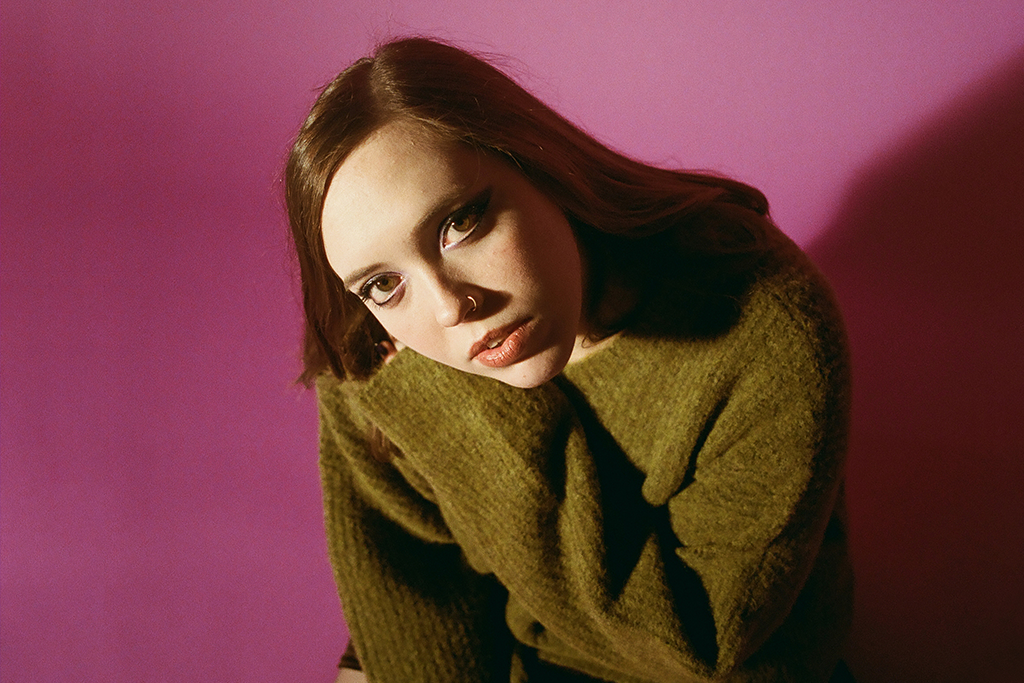
“I am excited,” Romy Hoffman, the woman behind the phenomenon that is Macromantics says in a steadfast tone, the attached emotions being difficult to decipher. From behind the two cocktails she’s ordered on a Sunday afternoon happy hour Melbourne’s conviviality offers to this freshly relocated rapper, it’s hard to tell if she’s convinced, or convincing herself.
It’s a week before Moments In Movement, the debut album from Macromantics, comes out in Australia, and a couple of months before it hits the shelves in the U.S. via legendary indie label Kill Rock Stars. The ensuing success seems set, but isn’t guaranteed. No one’s shown her the sold out signs that have since graced the doors of her album launches, nor the accolades that she’s received from media and fans alike. In fact, everything except the buzz surrounding her and the bustle she’s embracing is a little uncertain. If I were in her (incredibly attractive silver) shoes I’d be sipping down two Martinis too. Oh yeah, and I’d be excited.
“I’m kinda curious and excited and at the same time, I just want to enjoy this moment as well. It’s going to end one day, my career is going to end one day. It’s so weird to start at the end, and I think it’s good, it’s healthy to start at everything dies, and you are no exception to that rule, hon, so get off your high horse and do it.”
I started at the end with this piece too, stuck on fixing a headline to the words that were to flow once I inevitably got inspired about writing about my new favourite Australian. Listening to Moments in Movement and trying pick out a one liner that clinches the significance of this record was harder than I’d anticipated, not due to any lack but simply because of the plethora of astute social judgments and perfectly formed cultural references that Hoffman’s lyrical prowess delivers.
If you’ve heard her you’ll know what I’m saying. Impassioned words delivered with a blend of vehemence and vivacity, a weird yin and yang of life according to Miss Macro.
“[Right now my music’s about] being cynical, but in a light hearted way. I think it’s really important, that comedy/tragedy thing – tapping into both of those and realising the world is funny, and it’s dark. That it’s about murder but it’s about aesthetics, and, everything. Everything is everything. My art is everything is everything, and that’s what I’m trying to say.”
But everything?
The idea of something being so all consuming can be a little foreign to a nine to fiver. That’s not meant to be a belittling jibe at the banality that life can promote, I experience the same bewilderment, or even fear, towards allowing myself to be totally consumed by something. Instead, it’s a recognition or point of admiration to the people that embrace their passions and allow for that all-consuming potential to come into full realisation. It’s totally tough to resign one’s self to the relinquishment of fate, and let something so natural and necessary reach its full potential. I couldn’t say how many people I’ve met do that, but I’m sure it’s not many. These people are nuts, but brilliantly so.
“I’ve come a long way as a self. I used to be a really shy, timid person, in a really dark place – this [music] saved my life. I’m very grateful for having the chance to tap into my art. I could’ve turned to God – I just stared at the self and the capabilities of it and what I was thinking and feeling, and it would’ve been easy to turn to god but I chose art, or it chose me.” There’s no “ifs” or “maybes” – for Miss Macro this is life.
“Even the last couple of months it’s been, okay, I actually want to make a living off this. This is what I need to, or have to, do. I’m at that stage where – wow – I’m devoting so much time and energy that I want to be able to live off it, humbly, nothing lavish and buying heaps of bling, but just being able to work hard. It takes hard work, it takes touring, it takes promoting, it takes making albums, it takes being professional about it – it’s not like some party, I take what I do seriously and this is what I want to do with my life, and that’s only been apparent literally in the last month. And I never set out to be a rapper, it just happened. It was so autonomous, it was perfect – it has to work out.”
So how’d it happen? How did little, shy Romy find her way from being the bass player in Ben Lee’s Noiseaddict at the age of 15 to owning the mic and forging her own personal space, where Lydia Lunch meets Rakim?
If you’ve got the soundtrack to this article, please flick to track number six of the record – the autobiographical ‘Locksmith’, featuring heart draining confessionalist/indie hip hopper Sage Francis. If not, here’s the extended, less beat-infused version.
“I always appreciated music. At first I was obsessed with Michael Jackson’s Thriller. Unhealthily. My first idea of God was Michael Jackson – the first time I got my head around god it was thinking that this guy was god, in his red leather jacket. The first tour I saw was the Michael Jackson Bad tour, when I was like six. I had my banners.”
“Then it was Prince. And then I got into heavy metal – Guns n Roses, Metallica, Slayer. And from then I got into punk rock and that’s where it all changed. You think about [metal], that’s all interesting music but it’s highly glossed. And then I found this art form, anyone can do it, it has a political side to it, it has an attitude, a look, a sound, a feel – there are every day people, women, making this music and I was totally dumbfounded by that and it was like, ‘Wow my life has changed’.”
As we were weaving through the streets of Melbourne city before our interview proper started, Romy gave me a perfunctory rundown on life: her recent shows, the move to Melbourne, that kind of thing. When detailing the former we got stuck on rambling about the difference between shows where she played to an “indie” crowd, and then a typical Aussie hip hop crowd, the space where you’d think her performance would be received with the most enthusiasm. Not so, surprisingly – in most cases all the hip-hop dudes did was just stare. It’s pretty weird that the cultural content and social circumstances for hip-hop in that space are so heavily prescribed. It’s also that rigidity that makes Macromantics so refreshing in this context. That she’s not practicing chauvinism, spouting self aggrandizing lyrics, or frontin’, that she takes all of rap’s pretense as a game and looks it in the eye, it’s because of this that the possibilities she presents to hip-hop in Australia are endless. Every genre set in its ways needs a wake up call like Macro. And despite its foibles, Macromantics is still a product of Romy’s rap obsession.
“Hip-hop is this romanticism, and I love that element about it, and I love how it’s the Jesus Christ of music, it’s resurrected everything. I have nothing but love for it,” she says. “And I love it because it’s imperfect and it has so many contradictions, and sides to itself. It’s like this self sufficient being which is imperfect, and it says one thing but means the other.”
Talk about resurrections! Romy’s talking about the art of turntabilism, but beyond that hip-hop embraces a culture not concerned with political correctness – it stems from urban street culture and reflects that. Think back to your mainstream genre stereotypes, and the image of bitches, hoes and bling aren’t too far removed from hip-hop. So to use that medium to say something against the stereotypes that restrain it is equal parts admirable and postmodern.
“I can see sometimes when I’m performing I get some reactions of like, ‘What’s going on? Is she fucking with me? Is this some joke?’ It’s weird. I just like people – if they don’t like it they don’t like it, and if they do they do – whatever they think about it. I hope it takes them on a journey and makes them think, makes you look into yourself but at the same time step out of yourself.”
“I’m working on a mixtape at the moment, me talking about women, using that whole machismo bravado and flipping it, because I think it’s interesting, that’s my genre – objectifying music – that’s the music I make, not the music I make personally but hip-hop as a genre.” Put quite simply, more people need to do this, to be engaged with the culture they’re buying into and contribute something worthwhile to its evolution.
So from li’l punk Romy, how’d she get to be so fluent in her own personal prose of hip-hop? “I just see it as about timing, I was in the right place at the right time. I got into hip-hop when I was in America and kind of just fell in love with this art form – to me it was like punk rock all over again. Just like a social commentary, a way of life, an attitude, it had a look, a feeling about it and [was] actually saying something about the world and the self. A power to the people kind of art form, I’m always into that, and – you know – it made itself out of nothing.”
What I’ve learnt from Macromantics is that regardless of what’s out there, if you have enough belief in what you’re doing it doesn’t matter. Sure, Macro’s going to shift units – the response to the record has been phenomenal – but as we sat down a couple months back for this interview that wasn’t a given. There was a general uncertainty in the air, but none of it was about what she was doing. There was not one moment where Romy’s belief in her art wavered. I think that’s the ultimate ethos behind punk, where the DIY attitude becomes a philosophy in action, a philosophy that’s developed out of that belief. It’s also the reason new waves in music burst out of nowhere – some kid sitting at home in her room busting out rhymes suddenly feels the need to share it with whoever’s willing to listen. A mic and some beats produce the only viable option for getting someone’s thoughts out there in one piece. And the world evolves.
“Hip-hop to me is more about everyday people coming out and telling their story, and their story is as important as some biographer writing about some person, as important as some Hollywood film fictionalized version of the real – it’s everyday people speaking their mind, telling their truth.”
Romy’s choice of words has intent behind it – everyday people telling their truth is so goddamn pomo it makes me think I’m back at school, but the mindset behind it is liberating. She likens hip-hop to blogging, and vice versa, embracing that idea of constantly evolving truths and a dynamic relationship with the world. That’s where the idea of moments in movement comes from, and Hoffman is quick to emphasise the fluidity attached to that.
“You are part of a movement and I think it’s beautiful, what’s going on. Something is happening, be aware of that, you are part of a movement and you actually do help the world. Every single person has an effect.” I can’t tell if she’s talking about herself, or me, or a general “you,” but it doesn’t really seem to matter. “Everyone’s story matters and people are putting it out there, and [other] people are interested in reading about those everyday stories – I think that blogging is a form of hip-hop [laughs]. Everyone is an MC.”
One of the talents Macromantics delivers that is mostly lacking elsewhere is that ability of what seems to be free association – to jump from phrase to phrase but maintain both a personal and public relevance. In retrospect it seems pretty blog-like, weaving through layers of information and meaning, shifting focus points, consistently evolving given new environments.
“You get a beat and it evokes something. I sit with the beat as an actor would with a script, and I map it out, where is this beat going – I sit with it in different environments, I edit my old work, I see what fits, try and get a concept going. It’s a meticulous kind of process, there’s so much that can happen – endless possibilities. That’s why nothing’s absolute; there are infinite possibilities of what can happen to a song.”
It’s because of these infinite possibilities that the prospect of attaching some fixity to them sits somewhere between limiting and downright daunting.
“The recording process has to be done, and I get very philosophical about it. I really don’t like recording – I get nervous going into the studio, because why is it this take that’s going to sit in time forever?” The potential for a song and its content to evolve is part of Romy’s attraction to music, particularly hip-hop, and the way she engages with it. That idea of forever underscores it entirely.
Forever in any context is an intimidating concept, but ultimately a definitive version of any history does get captured for the sake of posterity, and when you have the opportunity to record an album it gives you more control of that version of history. For mine, there couldn’t be a better document of Macromantics than the record she released earlier this year – the product of time spent shacked up in a studio in the sweltering summer heat of ’05/’06 with producer Buchman (Tony Buchen). His contributions and the role that he played in framing the record are fundamental to what Macromantics, beyond Romy Hoffman, is. And being as self-aware as someone who engages in modes of self-expression should be, Romy knows it.
“I’m a perfectionist as it is, getting it right, and – yeah – you have to let go of your work, let it be in control of itself and not try and wring its neck. I think that’s really important. And working with Tony on this album, having someone else in the studio who is directing [is really useful]. It’s hard when you’re judging it for yourself, but when someone else can hear it and be like, yeah, I feel like you nailed it, that was the right one, it’s a lot more subjective to them and you need that, you need that other person there.”
So while having one authoritative version of something that is meant to be a dynamic response to time and space seems to undermine the whole process of moments in movement (a philosophy I’m willing to attach to the life and times of Romy Hoffman), it remains a necessity of music as package, or music in the cultural context of now. It’s not all about the commodity, but having a neat little something to take home sure is a sweet deal. And – well – wow! If a record isn’t the optimum form for Macro cultural delivery then the quality of Moments in Movement speaks volumes for the live show.
“It’s utter chaos. It’s all about that performance, it’s the past the present and the future, it’s like a black hole of sorts – the singularity of a black hole is that performance. And anything can happen, I don’t know how I’m going to be feeling that night, what I’ve seen that day, who I’ve spoken to, what I’ve eaten, everything. That’s why every show is different; it’s an eruption of emotions.”
It’s like a live Macromantics show bears the fruits of a reciprocal relationship Romy holds with the immediate universe, so that it’s impossible for two performances to be the same. Since the first time I saw her I’ve become a bit of a junkie, her ability to engage with her surrounding is unsurpassed in this country, and the passion she thrives off in performance forcibly makes you need more. But it’s almost like she’s anticipated that – proclaiming on the first song of her record (‘Miss Macro’), “I’m a heroine who leaves your head nodding like you’re using junk.”
On a broader level, it’s been a while since someone has come out of this country saying something so worthwhile, so honest to the self and so artistically accessible, and has engaged with a form so flexible so that she can mould her lyrics to fit her truths. That Macromantics espouses the idea of social commentary and a personal philosophy of sorts, both in such an uncompromising manner, and can still have a disc that finds it’s way to album of the week on Australia’s national youth broadcaster, is saying something for the significance and worth of her first full length record.
And that she can do it without the support network an artist practicing in their own genre usually has says even more – of both the artist and the art.
Moments in Movement has been licensed by American indie label Kill Rock Stars, for release in the US in January. This is phenomenal – the first Australian release proper on the label who’s role in the indie underground has been undeniable, from the early nineties with the platform they gave to the riot grrl movement in particular, with bands like Bikini Kill, Huggy Bear, Heavens To Betsy, Bratmobile to later post-riot grrl bands like Sleater Kinney, Erase Errata and Gossip. They’re also home to Elliot Smith, Xiu Xiu and The Decemberists, for those of you less inclined to get in touch with your inner grrl. So what’s an Australian girl dabbling in hip-hop doing on such an international indie stalwart?
“It’s weird when you’re at that beginning stage, and you send your record to everyone and obviously the right home is going to come out, the right foster parents, you know orphanage, is going to come and take it. Obviously for someone like me Kill Rock Stars was [that parent]”
When I read that, it was amazing
“Did it make sense?”
It made entire sense. Do you feel that there’s a political element to what you do?
“Yeah I do, and I think Slim from the label got that. He was just like, I’ve always put out music predominantly by women saying something interesting, and it is political, [but] in a velvety smooth way. It’s not like KRS-One or Public Enemy political, but you search deeper and there are definitely political elements there. Also, I don’t want to be preachy, I feel that there’s a way to changing the world without being in your face and abrasive about it. And I think people need the sugar coated version of something staunch.”
And the ultimate message?
“Do things from the heart, think about everything going on. Don’t take everything so seriously… Just being aware of the world. And the self: what is the self? What is true self in relation to the other? How you derive meaning – the world is pretty much your reflection of your inner turbulence.”
Good advice, huh? Engage with things, be aware, but in a light hearted way. Use the crap as a source of motivation to engage with it, and deal. In the world of Macromantics the songbook doubles as a guide to life – where the songs themselves act as the meanings Romy derives from the world and her place in it. Intrigued by both this process and the overt self inspiration, I ask her if there was any other form her philosophizing could take – you know, texts characterized by tautologies, á la philosophy proper, or visual works expressing the bizarre surrealism of life. I mean music, with beats, on a record, in a square package, received firstly through radio, made for (relatively) mass consumption, seems like a rather round the point way of expressing one’s self.
“It has that rhythm to it. It’s about time, timing, space. It’s about space and how you utilise that audio space. It’s pretty much like true science in a way, and philosophy as well. It jells. I’m a symbiotic kind of person who utilises everything, and music seems like the most apt medium for me. I do a bit of drawing but it’s too intricate and I don’t have the patience for that. I’m not a hand/ eye person, there’s a vast world in my head, like a vacuum, and [through music I] start tapping into that,” Macro ends her semi-free association rant with a bit of a giggle. It’s laughter at the lucidity of her apparent nonsense, the total sense that she manages to weave out of words that seem haphazardly thrown together.
“Whereas art, visual art, is more, ummm, feeling and touching? I kind of like the more abstract. Music seems more of an abstract art form because there is a person and people behind that music and when you listen to that on record or something it’s this eerie aura – you’re hearing these grooves on a record, where did it come from, that moment at which it was created?”
So it’s the mystery. The removal of the self from what is a pure expression of the self. Sounds like a bit of a contradiction, but going back to life according to Macro that’s what’s so great about the world, those contradictions that reveal the beautiful imperfections of the world we exist in.
And what now?
“There is no now, I don’t believe in the now, it is this movement and moments tumbleweeding through time. It has movement, a kinetic energy about it, and tapping into that – nothing is static and still, not even a photo which is the most…” She starts on something then interrupts herself. “Photography is such an amazing art like that, it fucks with your head, it’s an illusion. It’s still, it’s fixed, but what’s going on? What the now really is is moments in movement. Now is such a weird thing. I should’ve called my record that: Moments in Movement a.k.a. Now.”
+