View the Mobile Version of M+N

Featured Articles

Kid Sam: Out Of The Frying Pan

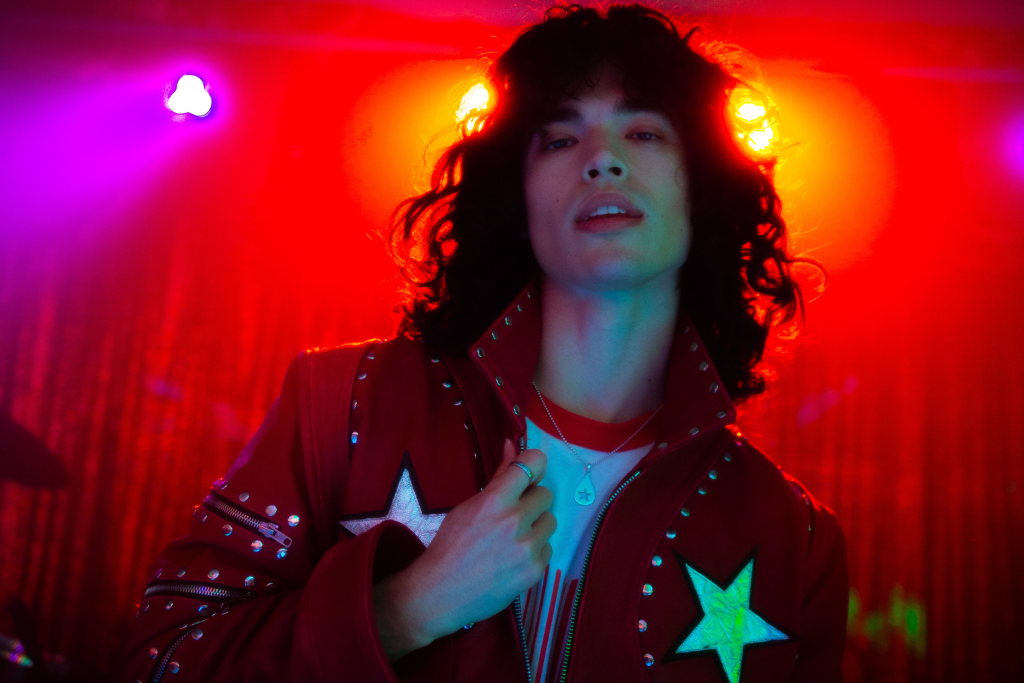
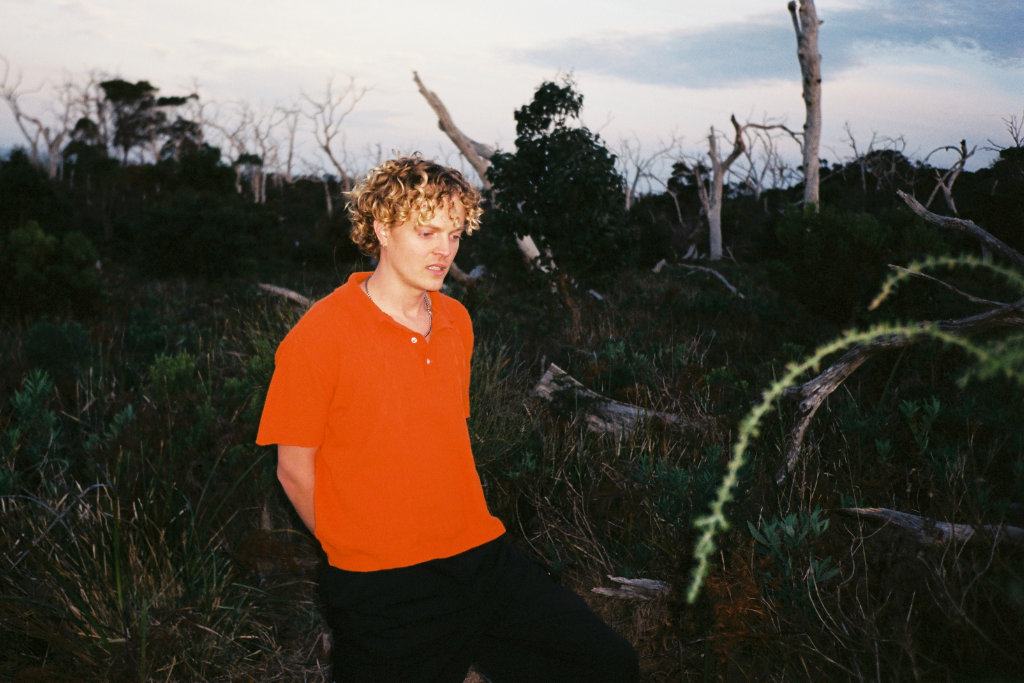
In the year since their last meeting, LAWSON FLETCHER finds that things have all but blown up for Melbourne duo Kid Sam. He talks to cousins Kishore and Kieran Ryan about their early days in a Melbourne sharehouse, their partnership with Two Bright Lakes and how they’re dealing with national notoriety.

Just over a year ago, when Kid Sam were barely a blip on the radar, I sat down for coffee with Kieran Ryan to talk about the self-titled album he had just released with his cousin Kishore. A year later, and I find myself opposite Kieran in a Smith Street cafe in Melbourne’s Fitzroy only a few blocks from our last meeting, only this time with Kishore in tow. In the interim, Kid Sam have all but blown up. Their album has gathered admiring reviews, heavy airplay and even an Australian Music Prize nomination, and they’re currently in the midst of their first national headline tour.

That conversation a year ago was tentative; questions and answers were given in nervous hurry or slow hesitation, mainly because I incessantly probed Kieran about arcane aspects of the songs themselves, as if he held the key to all those nagging questions listeners have about music’s meaning. We both learnt fairly quickly that it’s easier to talk “around” the music rather than through it, and today’s chat follows a similar pattern.

Yet things are far more jovial this time around, and it’s probably a good thing. The pair riff off each other constantly, as only cousins might, and even after talking for a short while you can tell they’ve grown together as friends as much as musicians. It’s this telepathic connection that charges so much of their music after all.

Last time we spoke, Kieran, you mentioned that the two of you playing together “just sort of coincided with living in the same city” (when you both moved down here from regional NSW). But is there a sense in which Kid Sam only turned out the way it did because of Melbourne?
Kieran: Not really, except maybe just on that practical level of having places to play.

Kishore: I dunno though. I just remember when I heard [Two Bright Lakes labelmates] Touch Typist and stuff, just being really excited and wanting to make something similar. I reckon if I was in Byron Bay I would have wanted to quit.

Kieran: Yeah, I guess you can still make good music elsewhere, but it just gives you so much inspiration and hope when you get to see and play with all these great bands.

I’d imagine finding yourselves in the Two Bright Lakes collective has been quite formative then. Kieran, you told me how awesome they’d been when the record was first released, but looking back do you think they’ve had an even greater influence?
Kishore: Well yeah, I started playing with Kieran when I moved here from Byron Bay, and a while after that, through a family friend I got in touch with Hazel [Brown], then I started playing in her band [Otouto] when it was called Hazel Brown, and then [I met] Nick [Huggins, the band’s engineer and member of Touch Typist], so everyone came out of this collective. There was this one residency at the Empress that Hazel did, and Kid Sam, Touch Typist and Seagull supported. I remember just seeing Touch Typist and just ... shitting myself!

Kieran: Yeah I remember they were playing right before us and I was just like, “Fuck! How are we meant to come on?”

Kishore: That was May 2007.

Right, exact dates!
Kieran: We could probably remember the days.

Kishore: Thursday nights.

Obviously it’s a period of time that sticks out.
Kishore: Yeah it’s funny now we play like huge gigs, but that one felt like … the pinnacle. Like, “We get to play at the Empress!”

So not only did you find bills to play on and other bands to play in through Two Bright Lakes, but a likeminded set of people?
Kieran: We played a gig at Mount Martha, out at Hazel’s family’s place, with Seagull, Psuche, Parking Lot Experiments. I was shitting myself more at that than playing at Meredith, more than Sydney Laneway or anything. Just because it’s people who are important in music and you know they have opinions.

Kishore: One of the most nervous I’ve been at one of our gigs was at a little place on Elizabeth Street, and there was like eight of my family and friends in this little tiny semi-circle around us and I was just sweating.

So you both started really playing properly together when you found yourselves as housemates around 2007?
Kieran: We only played together a few times growing up. We lived quite a distance apart and just had a couple of jams when we were kids. And then Kishore moved down here from Byron Bay, where he’s from. I had some songs and had sort of started doing a couple of tiny gigs by myself, just playing acoustically. I had been a bit bored by that and got him to start drumming.

We got a bit of stuff together then I kind of took off and went travelling. Then we moved into a house together and that was when we really started getting stuff together. When we lived in that house … we could jam all the time and work out a distinct sound, so there was a bit more cohesion between us rather than Kishore just hitting some drums to what I was playing.

So this was the genesis for the more collaborative arrangements on the album? Was this also when Kishore first started using cookware in his drumming?
Kishore: Yeah, I did it because I was pretty frustrated at that time, I just wanted to try something different. Kieran would always be like, “Where the fuck’s that saucepan? I want my blue metal plate!”

Kieran: It was kind of funny you’d always come in and want to make a pasta or something and be searching frantically for a pot or a wok. I’d walk into Kishore’s room and sure enough it would be attached to the drum kit, so it gave me and the other housemates the shits a little bit. But you know, I’ve always really liked the way he did it and that it wasn’t a novelty thing. When he does do it, he does stuff that genuinely has a good sound.

It’s great how they add a distinct timbre to the drumming, which we so often just think of as beat-keeping.
Kishore: Well it’s funny because they are a beat and a texture – even if you’re playing just a snare and a bass drum. but that’s been used for so long, it’s become a non-texture because you think it’s just keeping the beat. But it’s a different timbre when it’s the pots. It’s unconventional.

It’s also quite strong because you are just a two-piece, every little sound just kind of bristles in your songs.
Kieran: Yeah, I think without those couple of extra sounds it would sound a bit impoverished, you know it wouldn’t quite work as well as just the two of us maybe.

Are you fucking sick of references to and questions about pots and pans, though?
Kishore: Depends. Not if it’s a good question.

Kieran: It’s like interviewers think they’ve had some insight just noticing the use of it at all. Like, “Hey, so what about those pots and pans?”

Kishore: Or like every time we go to the airport they’re like, “Are they for like, cooking or playing?”

“It’s not like I sit around all day in a fit of black depression thinking about dying or anything, at all.”

A blunt question, Kieran, but what inspired all this talk of death and decay?
Kieran: [Laughs] I don’t know! I’m really not a terribly depressed person. I remember having a conversation with someone at some point and just going, “God, I just can’t just stop slipping it in to every song!” But I supposed it’s just such a constant, unavoidable thing that a lot of stuff tends to come back to it and when you’re trying to write stuff, when you need something to kind of put a foot on somewhere, that’s somewhere you can peg everything. But it’s not like I sit around all day in a fit of black depression thinking about dying or anything, at all.

So it’s not borne of personal experience?
Kieran: No, certainly not. I don’t think about these things all the time, and I’d certainly never chase someone through the desert with a shotgun [as the narrator does on ‘The Sunday Bus’]! Besides, I don’t really want to “express” myself or express my mood or anything at all when I write … I prefer to have a bit of an image of how a song might be, or tell a story.

With songs like ‘The Sunday Bus’, especially, it seems to belong to that Australian gothic tradition in the vein of say, Sodastream and The Paradise Motel, but even like the darker elements of colonial period writers like Henry Lawson.
Kieran: Yeah, I’m kind of aware of that tradition but I don’t really write to it. I think I listened to the Bruce Springsteen album Nebraska a lot, and that whole album does a similar thing for the American landscape, so I suppose it might be a kind of Australian version of that, but I wasn’t trying to do that consciously.

The sparseness of some of the music, the language of the music, suits the way you evoke those places.
Kieran: Yeah, that’s why I wanted to keep it sparse, I felt like that sort of suited the lyrics more. In a lot of them there’s meant to be, not space in the lyrics, but to be evocative of some kind of space.

Even quite literally, there is a remarkable amount of space in the compositions. Was this intentional?
Kishore: I’ve never consciously thought about space … It’s all just taste and playing a lot and listening to a lot of music. It’s all just semi-conscious how you arrange it. I think we just tried not to make it cliched.

Kieran: I’ve thought about space.

Kishore: I’ve thought about it but not that word, it’s more just intuitive.

This is the difficulty in trying to get musicians to dissect their own practice, isn’t it? It’s something that’s so genuinely intuitive.
Kieran: It’s always like some kind of interplay between conscious decision making about things and then just like subconscious throwing stuff up, but then you kind of have a vague idea as to why it should be there, it just kind of feels right. And it’s a bit of both I think.

When we spoke last year, Kieran, I asked if you’d had much interest interstate and you told me, “Well, you know, we get MySpace messages.” Did you ever think you’d find yourselves as you are now, embarking on a national tour?
Kieran: Not at all, after we put that album out I went back to uni and started studying again and I totally had the time.

Kishore: I didn’t think we’d every play out of Melbourne, maybe once in Sydney.

Kieran: Yeah, I thought we’d maybe have a small gig in Sydney.

So are you stoked with how big it’s become?
Kieran: It’s really good, it’s great to do some tours in different places and play to more people.

Kishore: It’s kind of stressful when you’re smaller. We used to stress about getting more than five people at our gigs and paying the sound guy, and now it’s so stressful doing interviews and stuff.

Kieran: Yeah. [Laughs]

Kishore: I just can’t keep up with all the media attention.

I’ll try to ease the pressure a bit, but do you at least feel an added sense of expectation now?
Kishore: Not on the tour at all.

Kieran: No, not on the tour, that’ll be fun. I feel really relaxed about that.

Kishore: I reckon there’s a little bit of pressure on with the recording, more than the first one, to be somehow a bit different. But I’d feel the pressure with Kid Sam anyway, not just to make it sound like a shitty second album like, “I’ve got the second album blues.”

So Kieran also mentioned to me last year that the airtime triple j had given to the record might help bring at least a “few” people to any interstate shows you might one day play. Clearly the station’s support has made this tour possible. Have you been happy with their involvement?
Kieran: Definitely. It’s been really good. It’s a national thing and it allows you to go to places and play your stuff. Kishore: Yeah, definitely, if you’re in Coffs Harbour or something, triple j would be the best thing for you to hear new music.

Do you know why it is that Kid Sam has gained such wider appeal outside of the Melbourne indie community, when the recording is often quite unorthodox in so many ways?
Kishore: It’s really amazing that people do like us, but it’s just not something we should think about if we want to make good music.

So this past year you’ve played scores of gigs, have the confidence levels risen?
Kieran: Definitely.

Kishore: I feel like I used to really want people to like it because I was proud of it and now I just enjoy playing it more.

Kieran: Yeah, like all those recent Laneway dates pretty much. [They] were enjoyable.

Have there been any absolute stinkers?
Kieran: Umm...

Kishore: Perth. [Laughs]

Kieran: At Perth Laneway my guitar just cut out constantly. The leads were fucked.

So have you debuted much new material recently?
Kieran: There’s been some tracks we’ve been throwing in.

How’d they go?
Kishore: We’ve been booed off stage. People are like, “Ceeeemmeeeteeery!”

Kieran: If we don’t play ‘[Down to the] Cemetery’ we get people coming up and telling us off. One guy came up to me at Laneway and was like, “Are you from that Kid Sam band, man? Great gig, I love that song ‘Cemetery’, I just went to a funeral and they played it!” It was really nice, but kind of disturbing.

It does seem slightly literal.
Kishore: You know what they should do, you know those amazing toilets that they invented that first debuted in Taree, where you go in and they play music, they should play ‘We’re Mostly Made of Water’, when you’re having a piss.

Kieran: Taree was the first place in the country to get those and people are like, “Oh, you’re from Taree, the place with the toilets!”

So was there any point over the last year, where you were just like, “We’ve made it!”, or has it just snowballed?
Kieran: Yeah, just snowballed really, we’ve never really “made it”.

Kishore: My friend Tim who lives in Canberra – I went to school with him – sent me a message the other day saying, “They’ve just played ‘Cemetery’ in Canberra’s most popular nightclub. You’ve made it!”

Wonder if Kevin and Tony were there dancing away? Who would you prefer to dance to Kid Sam?
Kieran: I hate Tony but he’d probably be a better dancer – he’s a bit more coordinated.

+

Kid Sam’s national tour continues tomorrow night (March 26) at the Cambridge in Newcastle with Seagull and Deep Sea Arcade. For other dates click here.

  -   Published on Thursday, March 25 2010 by Lawson Fletcher.
Related Artists


Your Comments

NiteShok  said about 1 year ago:

Good interview. Great band.


SPOD  said about 1 year ago:

I thought these guys were Aussie Hip Hop from the name.


raven  said about 1 year ago:

Guys, at this point I think it's fair to say that Ruth Bailey has said everything that needs to be said about Kid Sam.

No point writing anything more.


Ash-showoff  said about 1 year ago:

Neat interview.

The Drummer looks like a clean version of JunkiePhil, I reckon.


whale  said about 1 year ago:

hahahahaha, that live review is extraordinarily terrible.


spruik  said about 1 year ago:

onya ruth.


tig  said about 1 year ago:

You wonder how it would get past an editor.


tig  said about 1 year ago:

Great interview lawson!


whale  said about 1 year ago:

yes, yes indeed.


JunkiePhil  said about 1 year ago:

Ash-showoff said 2 days ago:
Neat interview.

The Drummer looks like a clean version of JunkiePhil, I reckon.

Mother fucker, I washed my hair yesterday, 1st time in .....fuck knows.
Nah, I agree.


quickstixpenny  said about 1 year ago:

Ruth has a blog!

[http://ruthbailey.com.au/]http://ruthbailey.com.au/(null)


quickstixpenny  said about 1 year ago:

and i have no idea how to post links. sorry guys.


raven  said about 1 year ago:

Um yeah I should've added back then, great interview here and cool band too! Sorry for the off-topic.


You need to be logged into Mess+Noise to contribute to the Articles.
Go on and Log In or if you you're not a member, feel free to Sign Up.

Today On Mess+Noise
Related M+N Content