View the Mobile Version of M+N

Featured Articles

Philadelphia Grand Jury: Trial And Error

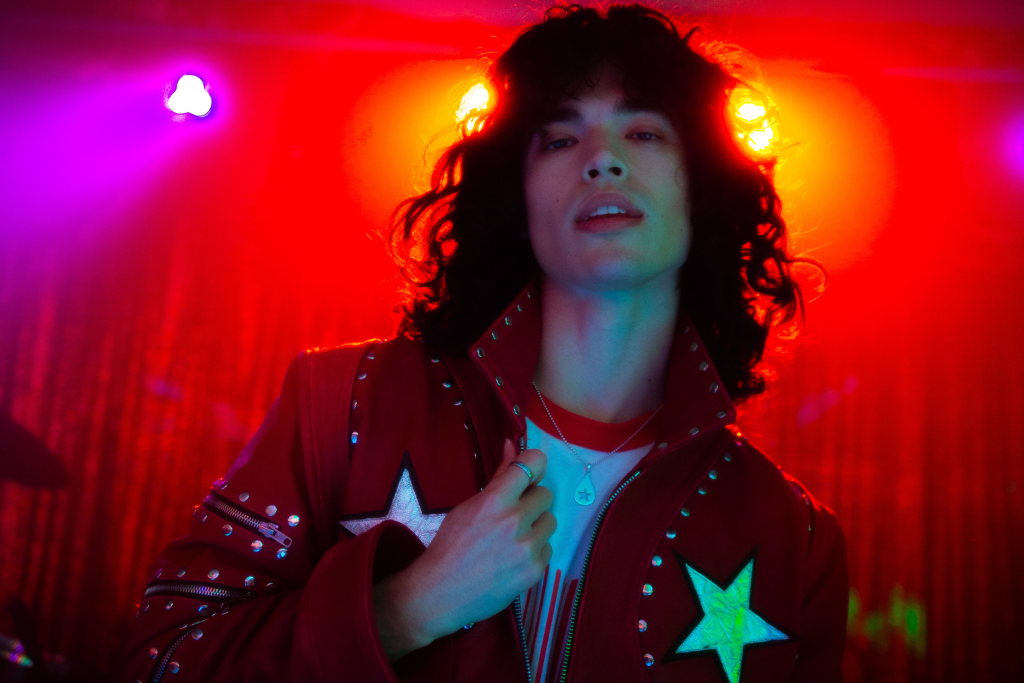
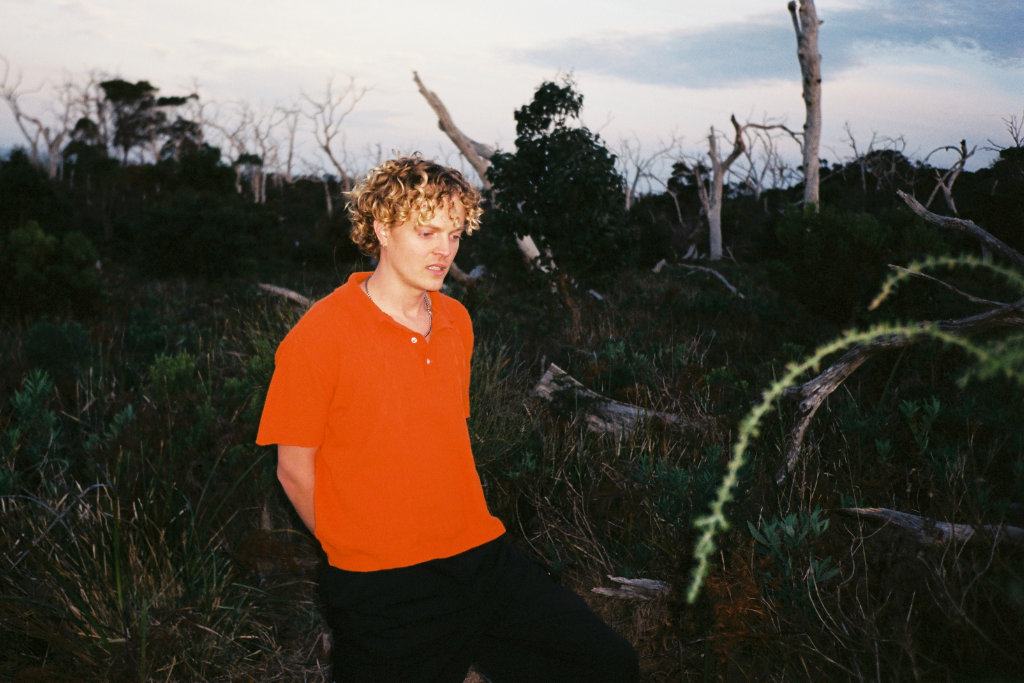
Despite their on-stage bravado, Berkfinger from Sydney’s Philadelphia Grand Jury has a confession to make: he’s embarrassed about his speaking voice. He speaks to DARREN LEVIN about their primary school beginnings, their debut LP ‘Hope is For Hopers’ and their various on-stage mishaps over the years. Flatbed truck photos by CAROLINE MCCREDIE.

It’s 11am on a Monday and Simon “Berkfinger” Berckelman from Philadelphia Grand Jury has spent most of the morning trying to fix his 1959 Japanese Silvertone, an “irreplaceable” guitar that got caught up in the chaos of a recent live show. “It’s broken in two bits,” he laments. “They’re hollow and they’re made out of masonite, so that’s probably why it broke so easily.” That, and the fact he threw it against a wall. Twice. “Yeah, that was stupid. Now it’s going to cost extra to fix.”

With a show as physical and energetic as Philadelphia Grand Jury’s, there’s bound to be collateral damage – from the cartilage in Berkfinger’s left knee to the “piece of shit” piano they destroyed with a sledgehammer at Sydney’s Annandale Hotel. And people in the front row, consider yourselves warned: you will get wet. “[Bass player] MC Bad Genius has kicked speakers into the crowd and made people bleed,” recalls Berkfinger. “When we went up to apologise afterwards, the guy asked us to take a photo with him.”

The band – childhood friends Berkfinger and MC Bad Genius (aka Joel Beeson) and a rotating cast of drummers that now includes 54-year-old jazz/funk veteran Calvin Welch – have bottled up some of that wildly unpredictable energy on debut outing Hope Is For Hopers. Out on the band’s own imprint Normal People Making Hits in conjunction with Boomtown Records/Shock, it was recorded on a shoestring budget after-hours at BJB Studios in Sydney, where Berkfinger works as an engineer. Off the back of a combustible live show and a novelty first single – ‘Going To The Casino (Tomorrow Night)’, a track written in Berkfinger’s grandparents’ basement four years ago – it entered the ARIA album chart at #34.

But for all their musical bravado, it’s surprising to hear that Berkfinger is nervous about the sound of his speaking voice. So much so he prerecords the band’s banter on a sampler, which he manipulates during gigs. And while it’s difficult to discern down a crackly VoIP line from Sydney, there’s nothing out of the ordinary about it, save for the odd John Safran inflection here and there. In our lengthy chat, we discuss the band’s meteoric journey from cellar-dwelling solo outfit to triple j favourite in just a few years.

So the band started out as a solo project for you.
Yeah, about half of the songs on the album were just me. It’s not like I was working towards an album, I was just writing these songs and I didn’t really know why. I met the other guys and when we agreed to start a band I said, “Well, I’ve got these songs, let’s add some other songs to what we’ve already got.” Collaborations started occurring with the other fellas, and now we’re at a point where we have a band, I guess.

And you’ve known MC Bad Genius for 20 years?
Yeah.

Did you play in bands together in the past?
We had a funk band years ago. MC Bad Genius and I used to love funk. He’s gone completely off it and while I still love funk, I realised that I am never going to be a dude in the ’70s playing legitimate funk.

Well, you have a guy in your band [Welch] who used to play in Earth, Wind and Fire.
That’s true, but it’s him not us. I am a white guy from Sydney and I grew up in the ’90s. I have to be myself. That’s probably why we dropped the funk band. All we could do was copy what had been done better. Funk is the kind of genre where there’s a right way to do it and a wrong way.

And most get it totally wrong
Exactly. But I guess the one thing we’ve learnt from it is, whether it’s punk or funk that we like, it’s always got a groove. It’s all about rhythm. On our next album we’re going to be bringing out the groove more.

And I guess Calvin would have an influence in that respect.
Yeah, we want to get Calvin involved, and also we’ve been thinking of making it with computers and other things. I’ve got a little room in this pub on the edge of the city [in Sydney] that’s gonna be knocked down in two years’ time. Until then, the pub owner has let me have a free room in there. We’ve got all the recording gear that we used to make this current album there, so I’m just gonna get up there in that little room and start working on stuff. Out of necessity, some of it might have to be looped-based and stuff, and I’m really interested in what might happen with that.

It’s interesting because, hearing your new single ‘The Good News’, I was under the impression you were going in a more power-pop direction.
It’s gonna be poppy, that’s for sure. It’ll just be more groovy pop. We’re suckers for pop music and that will not change.

Did the fact that you and MC Bad Genius are childhood friends help or hinder the recording process?
It helped only because, if we were childhood friends and he was anything like me, we’d be fighting all the time. But he’s the kindest, smartest and most patient person that I’ve ever come across. He’s been like that since I met him. The balance of me, being hyperactive and having a lot of ideas … and his patience is a really good combination. That’s really the key to the band. If we lose that, we lose what’s special about us.

Where did you first meet?
At school.

Primary school?
Yeah, we used to get in trouble. And then we went to high school together as well. I didn’t talk to him for about four years. We were buddies and then we weren’t buddies. He was really into jazz in high school. He basically missed everything that happened in the ’90s. Like, he doesn’t know who Veruca Salt is – he just hasn’t heard massive ’90s pop songs. It’s really funny because he comes at things from a different angle, obviously. Eventually I played some early Jon Spencer Blues Explosion records that were really lo-fi and fucked up at a school camp or something, and he was like, “What’s that?”, and that’s when we became friends.


So you’ve been re-educating him since then?
Well, not really. He’s smarter than me [laughs], but I opened him up to some stuff that he’s since run with.

Conversely, did he play you some jazz records?
Nah, I’m not into jazz. I hate jazz [laughs].

“We just turn up and set up. We don’t care what microphone we’re using, we just turn it instinctively to the places that make us feel good and hit record.”

You won [triple j’s] “Unearthed” last year. Did that open many doors?
Well, I guess it meant that triple j really wanted to help us. And we’ve entered a little partnership with them – we played triple j gigs for them and they play us on the radio. It also means that when we go to places like Ballarat, there’ll be like 150-200 people there that know the songs that have been on triple j. We’re lucky to have a national network that plays music for young people of any sort. Even if they’re picky about what they play, the fact is they do play stuff that young people like. In every little town, it’s got its own little frequency. It means that we can play in regional areas and get a good response and get people to come.

Do you think it’s still as relevant given kids can now discover new music on the internet?
People don’t go, “Hey, I heard your track on the internet.” The thing is, triple j fans are people that come to gigs. If you’re a triple j band, you’ll have people at your shows. If you’re a Nova band, you might not. Nova listeners are more likely to just listen to music in their car and not get into live music.

Do you feel like you fit into that retro rock scene, bands like Little Red and The Harpoons.
We played with Little Red and they were jerks. They were really rude to us and thought they were rockstars. They’re the meanest band we’ve played with to this day, so we definitely don’t resonate with them as people. Musically, I don’t know. I think we started off with a retro vibe – we were really into bands like The Sonics and early rock’n’roll like Little Richard. But I feel like Little Red are going to keep doing that and get better at what they do, whereas we don’t have to be retro. We like sounds that are a little bit fucked up and interesting.

Which brings me to your new album. Given your background as a producer, a mixer and an engineer, how much of an influence did you have on this record sonically?
I think a complete and total influence but not via any plans or thought before the incident occurs. It’s the one time – when I’m operating music gear – that I don’t think about what I’m doing at all. I just do it. When I work with a band I think about the psychology of their performance – where they’re at and how am I going to get something good out of them … With our stuff, we just turn up and set up. We don’t care what microphone we’re using, we just turn it instinctively to the places that make us feel good and hit record. It makes for unique vibes and it’s made the album very eclectic, especially because it’s occurred over four years with different people.

Stylistically I’d agree it’s eclectic, but it does sound like there’s a consistent sound, production-wise at least.
No matter what genre we think we’re doing, it still sounds like us. We like things to a bit groovy and bit messy. I like to take something that’s really pleasing and immediate and then put something a little bit odd right next to it.

You recorded the album on a shoestring budget. How shoestring are we talking?
There’s some figure put out by someone that it was $2000-$3000. But it was actually less than that. We just had to pay for mastering, so maybe $1500. The rest of it was recorded after midnight at our recording studio [BJB] after the clients had gone home. We’d pack everything up and then unpack it all and record all night.

Over how long?
Probably a day a song, but over four years. And there have been about 40 songs.

I guess that explains the eclectic nature of the album.
Totally. We’ve been in very different headspaces. I’ve grown up so much in four years and so much stuff has happened to me. I’ve had so many different ideas about what sounds good or what’s cool. Whereas on the next album, we’re hoping to do it in January or February.

So you can almost trace the evolution of the band on the record?
Yes, and we were originally considering putting the album in chronological order, which would’ve been interesting … At the end of the day we chose our favourite songs, the ones people liked best out of the 40, and tried to make a nice selection of music. In fact, Vijay Khurana from triple j did the final tracklisting. We had a different one going and I was on a plane with him. He was listening to it and said, “Yeah, that’s cool, but I’d do it a little differently.” I left it with him for half-an-hour and he gave me a different version. I listened to it once through and it was perfect. But I guess it’s because he has to do tracklistings for the radio. He really understood the vibe and the flow and because he was a third party he could look at it with a fresh perspective.

Was it difficult not having a third party throughout the recording process?
By the end of it we were complete nutjobs. We had no idea what was good or bad. I usually have ultimate control over that, but I couldn’t do it. I got my flatmate, Vijay and various other people to help out in the end and tell me what I was doing right, or what I was doing wrong.

Do you think for the next one, you’ll get a producer on board?
[Pauses] No, because we don’t want to just give money to some dude. But maybe if the right person came up we’d think about it. The thing is, I’ve worked on a lot of albums as an engineer where there was a big-name producer from America getting a shitload of money and I’ve seen how bad those albums can end up. There’s something about [American] producers and Australian bands – they still don’t take it seriously … I really feel that happens a lot and I don’t like that. That said, there’s not much production talent in Australia and not many producers I’d trust.

A lot of bands here get duped into using American producers who really don’t offer anything besides a big-name credit.
Yeah, totally. But that’s what music industry people, all these big label bosses, need because it helps them promote the album … It doesn’t mean anything to fans or musicians, the big name. It doesn’t effect the album, in fact it may make it worse.

Witnessing that first hand, does that inspire the DIY approach?
Totally. Fuck it, why would we have a guy come around and fuck with our shit, when we can record at midnight with a couple mics and just play the songs. That suited our sound currently as well. But if we want to go somewhere different soundwise, I’m not going to be able to produce it. In that case, we will need a producer, just the right one.

How does the Boomtown Records signing fit in with your DIY aesthetic?
Technically, it’s a partnership between our label Normal People Making Hits, Shock Records and our manager. It’s a four-way split. They take a cut like a distributor, or maybe a tiny bit more, and for that they consult us and help us because they know how to market records and do all that stuff. So they’re just a team member. It’s not like we’re signed to them and they make decisions. We all make decisions together.

Their roster [Getaway Plan, Horsell Common, The Amity Affliction, etc.] seems really out of step with the music you make.
Yeah yeah, but not their approach. They’re really into grassroots stuff and word of mouth. In terms of a business deal, it actually make sense.

Moving onto your live show, the whole pre-recorded banter thing is brilliant because a lot of frontmen are expected to be stand-up comics as well.
It’s really hard to say something to people while tuning your guitar and trying to work out what the fuck is wrong with your amp.

It’s not born out of shyness as well?
It’s nerviness about what my speaking voice sounds like. If I record it I can control what it sounds like. When I speak, as you’re hearing now, I have a very odd voice. When I sing, my voice is a lot lower and different. I just didn’t like the sound of my voice, I didn’t want to say dumb stuff and I wanted to be a weirdo, so I started using the sampler … I’ve heard a couple people say that it’s pretty disrespectful not to talk to the crowd.

I always find it an unnatural thing. Watching bands struggle to fill dead air.
Yeah. And because it’s addressed to the crowd in question, it’s still personal, it’s not just show business or a program.

How about the infamous piano smashing incident at the Annandale. Was that premeditated?
We heard that someone was giving away a piano and all we needed to do was get a trailer and pick it up. We got it and it was a piece of shit. It was out of tune and out of whack and a key broke off during soundcheck. Dan Rule from the Annandale was like, “It’s a piece of junk. What are you going to do with it?” And we were like, “Let’s just trash it after the show.” So he gave us a sledgehammer and we put it behind it. I thought, “If I really feel like it, I’m going to kick this over”, and then MC Bad Genius gave it a punch and started riding it like a surfboard. After the show, we threw it over the fence into an abandoned building site. And it’s still there.

Maybe you should donate it to the Hard Rock Café.
[Laughs] It’s looking pretty worse for wear.

Have you ever sustained injuries during a show?
MC Bad Genius has to wear knee and ankle straps now. He’s a big fella and the bottom half of his body is messed up from jumping up and down. I have a bit of cartilage damage in my left knee that’s from jumping around. Your hands always bleed and you always get hit in the head, but I haven’t had stitches yet … And also Bad Genius has kicked speakers into the crowd and made people bleed. When we went up to apologise afterwards, the guy asked us to take a photo with him.

It’s like the whole getting spat on thing during punk in the UK in the ’70s.
It’s a bit different, I think. People are a bit more conscious about germs these days.

+

Hope Is For Hopers is out now on Boomtown/Shock. Tour dates here.

  -   Published on Tuesday, November 10 2009 by Darren Levin.
Related Artists


Your Comments

NiteShok  said about 2 years ago:

Excellent interview Darren. Nice and long. Great read.


shaun  said about 2 years ago:

the premeditated smashing of an already broken piano is so rock.


timewaster  said about 2 years ago:

Those comments about Little Red are really unfair.

Little Red are really nice guys. In fact, I can't think of a friendlier, more approachable band in Australia.


fliegende hollander  said about 2 years ago:

Nah its true, Little Red are mean. One time they looked at me like I was the devil for barging in on them and smoking in their dressing room.


TomHall  said about 2 years ago:

''the premeditated smashing of an already broken piano is so rock.''

ROFL


Ash-showoff  said about 2 years ago:

Neat interview.


You need to be logged into Mess+Noise to contribute to the Articles.
Go on and Log In or if you you're not a member, feel free to Sign Up.

Today On Mess+Noise
Related M+N Content