No New Notifications

Ghosts Of The 'Burbs

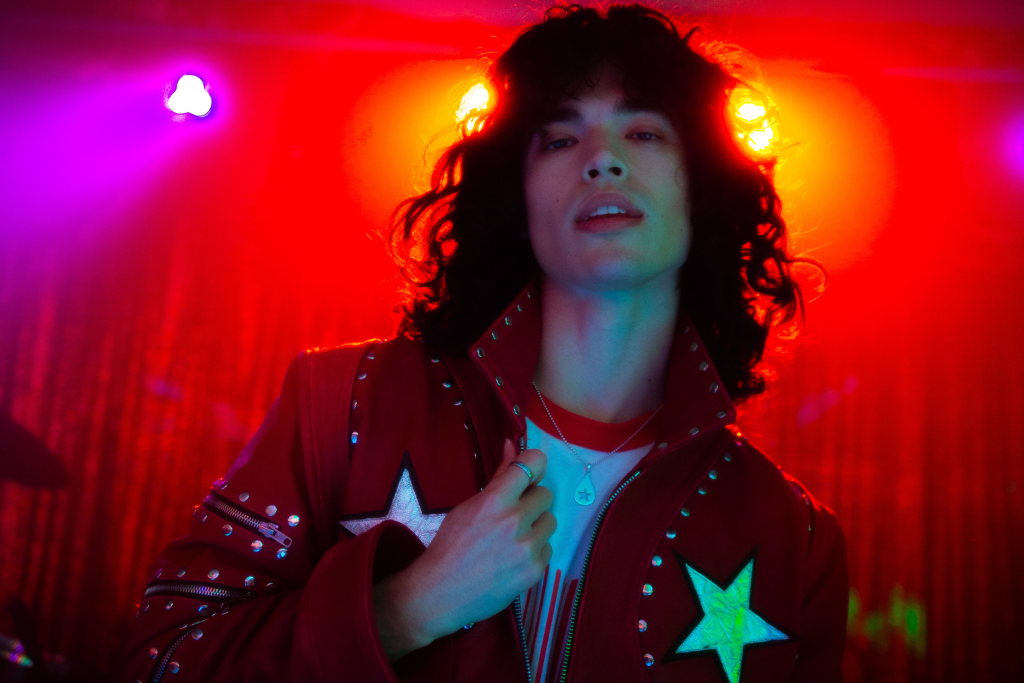
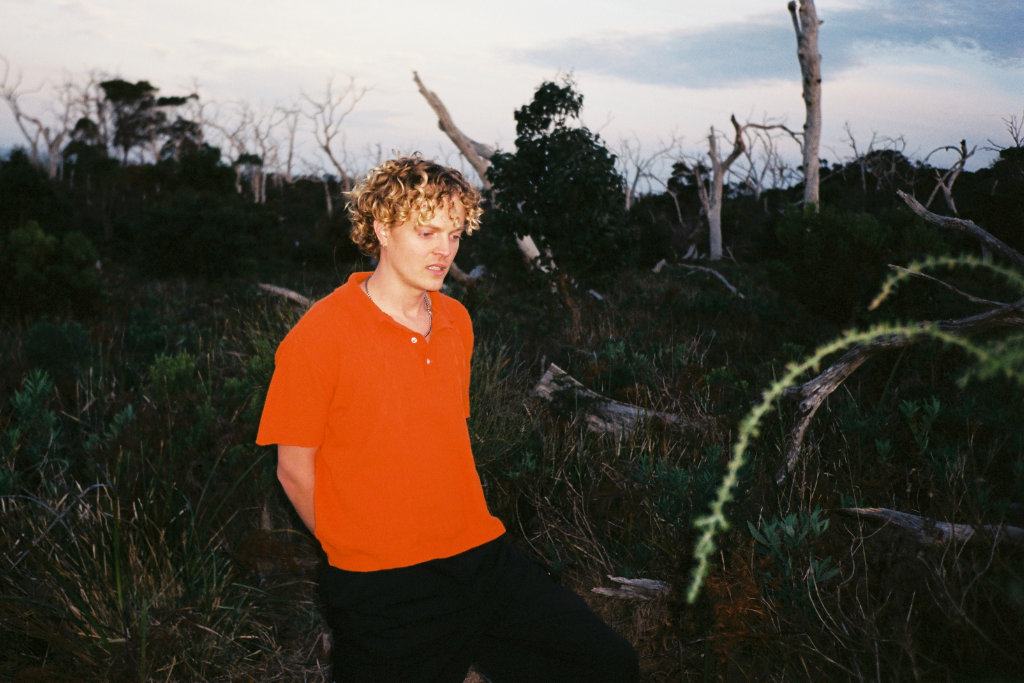
Sydney’s Ghosts of Television are proudly suburban, writes SHAUN PRESCOTT. With photography by JOCELYN BOX.

The Goodbye Sunshine festival was a brave, if rather optimistically scheduled event held in Marrickville during the first week of autumn. Fourteen bands were organised to play between 5pm and midnight in a large warehouse off Victoria Road. When I arrive at 9pm to catch the Laurels and Ghosts of Television the schedule is running three hours behind. Everyone is ridiculously tanked and the police arrive only moments after I do, handing out cannabis cautions and dragging off the most conspicuously corrupted among us. Police sniffer dogs stalk through large groups of cross-legged folk swigging from longnecks and flasks. A man wears a milk crate on his head.

Two hours later there are markedly fewer in attendance, but the folk who remain appear even worse for wear, with the constituents of Sydney five-piece Ghosts of Television being no exception. As the band set up, a member of Sydney punk group Yes! Nukes grabs hold of the mic and won’t let go. He sounds fucking horrible, but Ghosts go about their business setting up, brave faces, brave souls.

The thing with Ghosts of Television is, their tension is always so blatantly perceptible. It’s no surprise at all when four songs into their haphazard set – after vocalist Nic De Jong’s routine-but-never-unwelcome projection into the audience – the band falls to pieces, taking their instruments with them. There are cracked keys on a pricey looking Korg and the drum kit is strewn across the room, though most of the group and a few members of the audience keep banging furiously on the skins. Guitars are scraped across the concrete warehouse floor by their leads. The sound guys don’t look happy, but the crowd is in frenzy. The place is fucking pumping.

I’d been a fan of Ghosts of Television for about a year, written about them a few times, managed to hear a few of their self-released recordings, but they became my favourite band in Sydney right there and then. De Jong is ferocious on stage, the way his face contorts so maniacally when he yells into his mic, and the band sound like nothing else around in Sydney. This music is from the suburbs; borne of the frustration of watching affluent inner city hipsters – self-satisfied with their mediocre indie-pop and electro groups – get inexplicably big. It’s also the sound of a group whose appetite for sound is unlimited. In the great spirit of post-punk, Ghosts of Television are sonic explorers happy to inherit musical influences from an almost infinite array of styles.

Fast-forward a few months to the present. The band are about to release their new EP, Furthest Village From The Sun, through Chatterbox. It’s a recording they’ve had in the bag for over six months. A share house in Chippendale is where I meet the group, which consists of De Jong on vocals, cousins Daniel and Nick Hollins on guitar and synth, respectively, Nathan Ashmore on bass and Adrian Clarke on drums. The ensemble is fluid in the sense that the band swap instruments regularly throughout a show. De Jong is the main songwriter though Hollins has also contributed in a songwriting capacity.

“I don’t usually drink before we play,” De Jong says of the Goodbye Sunshine incident. “But if everyone has been drinking and a string breaks in one song, or a lead breaks and we have to swap it we all get a bit tense. And then we just go, ‘Fuck it.’”

“When we fuck it up that’s it,” Daniel Hollins confirms, to which De Jong replies, “and that’s about half often – every second show. All our gear is really unreliable.” It turns out the house equipment at Goodbye Sunshine wasn’t quite up to scratch either.

Most of the five-piece come from the Central Coast of NSW, while two members come from Sydney’s western suburbs. The five bonded over a mutual disdain for most local music.

“We just thought everyone else was shit,” De Jong states matter-of-factly. “We mostly bonded over dissing other bands.”

“There are a lot of pop-punk bands up on the Central Coast,” Daniel Hollins adds by way of explanation, “We played in some battle of the bands’ up there, and every single band was a pop-punk band.”

“It seems like as soon as a band has released one EP or album they’re in the realm of cocaine and bitches,” De Jong explains, referring to Sydney bands. “The Valentinos for example. They put out one EP and suddenly they’re rock stars. It’s just insane. People don’t realise its just Sydney, people aren’t aware of the context they’re working within. They’re just deluded.”

“It’s strange to wonder where their money comes from,” Nick Hollins interjects.

“They still have to work in call centres and shit,” De Jong adds, “They just pretend.”

Far from doggedly career orientated, De Jong and drummer Adrian once played in a band formed especially to play the Velvet Underground’s seminal noise-rock opus ‘Sister Ray’, which they did at every gig. While we chat, the group speak enthusiastically about black metal, Steve Reich, the Pop Group, Digital Mystikz, My Bloody Valentine and Disco Inferno.

When I started playing in Sydney, I thought, ‘Fuck all these richies from the city’. I just wanted to hurt their ears really. We really enjoy that, just making a racket.

The band’s sound has evolved quickly since their 2007 demo Bi-Gong-Xin, which was a mostly instrumental affair. The demo is notable for the disquieting, dubbed-out pace of ‘Cash’ and the minimal, vocoder-coloured groove of ‘Scumbeat’.

Their next release was a CDR single for the track ‘City of Painless Childbirth’, which features on the latest EP. The CDR contains four experimental cuts, and illustrates one of Ghosts of Television’s most distinctive and enduring strengths – the unsettling atmospheric textures the band cocoon their songs within. Haunted synth melodies weave among the rock ensemble like some greyscale velvet threaded among machinery. It imbues in their music an intractable sense of tension between light and dark, a thoroughly human quality, at once repulsive, at other times luxurious.

“When I started playing in Sydney, I thought, ‘Fuck all these richies from the city,’” De Jong replies when asked if suburbia influenced the music of Ghosts of Television. “I just wanted to hurt their ears really. We really enjoy that, just making a racket.”

Listening to their EP, there appears to be a common vitriolic thread that ties the four tracks together; a frustration at the relentlessly selfish culture that pervades the city. It’s the sound of a band that has finally captured a sound and set upon applying that sound to song. Lyrically, these are some of the timeliest punk songs Sydney has birthed (or endured) for some time. In a climate where young artists are being priced out of the inner city, urban renewal and regeneration is in favour of middle-class white-collared modernity, and young artists are, pretty much, viewed as scum. During ‘City of Painless Childbirth’, De Jong sings, “Sydney cowers beneath the threat of the devil’s chequebook turning red.”

“We were always jamming out in the west, and I’d see Hillsong [Church] people all the time,” De Jong says of the inspiration behind the lyrics. “It’s just about people trying to buy their way into heaven I guess, and people in Sydney are always trying to buy their way forward.” The song’s chorus repetitively chides, “There is no salvation that you can buy”.

“I just wanted to let people know that it’s a fact. There’s not (any salvation you can buy), so don’t bother going down that path,” De Jong says.

“We were playing at Spectrum heaps as well,” he adds. “We did two Hot Damns [a regular club night] within two months to kids and I just wanted to give them some advice.” (Ironically, given his wise intentions, De Jong broke a knee cap at one of these shows during the climactic peak of ‘Buzzrd’, the band’s metal-inspired homage to Varg Vikernes).

When I ask if his convictions would be different had he been brought up in a wealthy inner-city suburb, he replies in the negative.

“My dad would still have been the same no matter what,” he insists. “He schooled me pretty well I think: he formed my moral compass. He was brought up by teachers, they were Dutch and Presbyterian, really buttoned down, and he moved away from that. He still held onto the core religious beliefs but integrated them into his life and was less dogmatic. He had a belief in the good of man, and trying to help people. Everything I am is because of my dad.”

“Walt’s a good man,” Nick Hollins chimes in, referring to De Jong’s father.

Nic says the band did nearly 60 takes of ‘City of Painless Childbirth’ at Big Jesus Burger studio, where Burke Reid of Gerling manned the desk for the recording of the EP. The song was originally titled ‘Naked Sluts in Mud Huts’, though the name was changed to avoid scandalising Sydney’s community radio presenters. De Jong claims he found the title in the lyrics of a Throbbing Gristle song.

Needless to say, Ghosts of Television regard themselves as outsiders. “We’re not part of a scene like a lot of bands are,” De Jong says. “We can’t play at the fashion nights and we can’t play at the experimental gigs because we’re in between. We have to rely on our mates.” The band cites the Laurels, Atrocities, Warhorse and Talons as some local bands they identify with.

“Even in Melbourne,” De Jong continues, “Bands like My Disco and Fabulous Diamonds have a set sound that they work within. But we don’t have a set sound so people don’t talk about us in that kind of way. We are everything. We like reggae and hip-hop as much as we like noise.

“It’s always the big 30-year-old guys in Dead Kennedys T-shirts who come up to us after the show saying, ‘That was fucking awesome.’ In Melbourne, at the St Kilda festival we played to a whole lot of weird bogans. I kicked a mic stand into this guys throat … ”

“Did he fart on you?” Nick Hollins asks.

“No that was a different guy,” De Jong replies, “But I kicked the stand at him and after the show I went up to say sorry to him and he said, ‘Nah man, this is fucking Melbourne! Don’t apologise, that was fucking awesome!’”

Later that night I catch Ghosts of Television play a low-key show at a warehouse in Surry Hills. Next door, Newcastle noise/improv group Castings are playing in their regular space and there’s something oddly utopian about that. Ghosts of Television are considerably more restrained tonight than I remember them ever being, though Daniel Hollins did say that the three times I have seen them play have been “really strange, fucked up shows”.

It’s true: Ghosts of Television wouldn’t fit in with Sydney’s ever-gestating experimental scene. Which is a shame because experimentation, aural curiosity, the sheer sound of things, is something that fascinates and drives Ghosts of Television. Their new EP marks a shift to a more streamlined art-rock sound that relies on riffs and melodies and lyrics more so than their earlier material. Though judging by the crowd in tonight’s tightly packed room, people still don’t know what to make of this band. They’ve always shared oddly incongruous bills and played strange venues and maybe, perhaps, they’re just too honest for Sydney. They don’t mind dissing that’s for sure.

The band is optimistic about the future though. They’re currently working on new material for an album that will emerge some time in the future. “We’re not labouring over it though,” De Jong insists, “If you have to labour over it to make it sound good we just fuck it off. We’ve had songs with awesome hooks and stuff that we’ve just fucked off because of that.”

+

  -   Published on Friday, June 6 2008 by Shaun Prescott.
Today On Mess+Noise
Related M+N Content