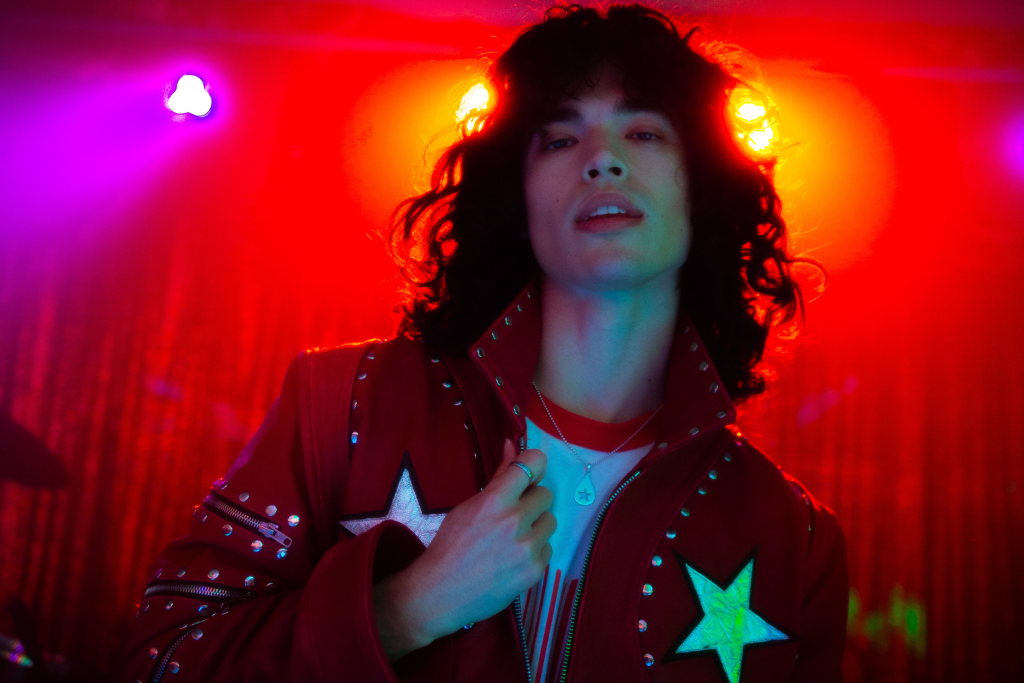
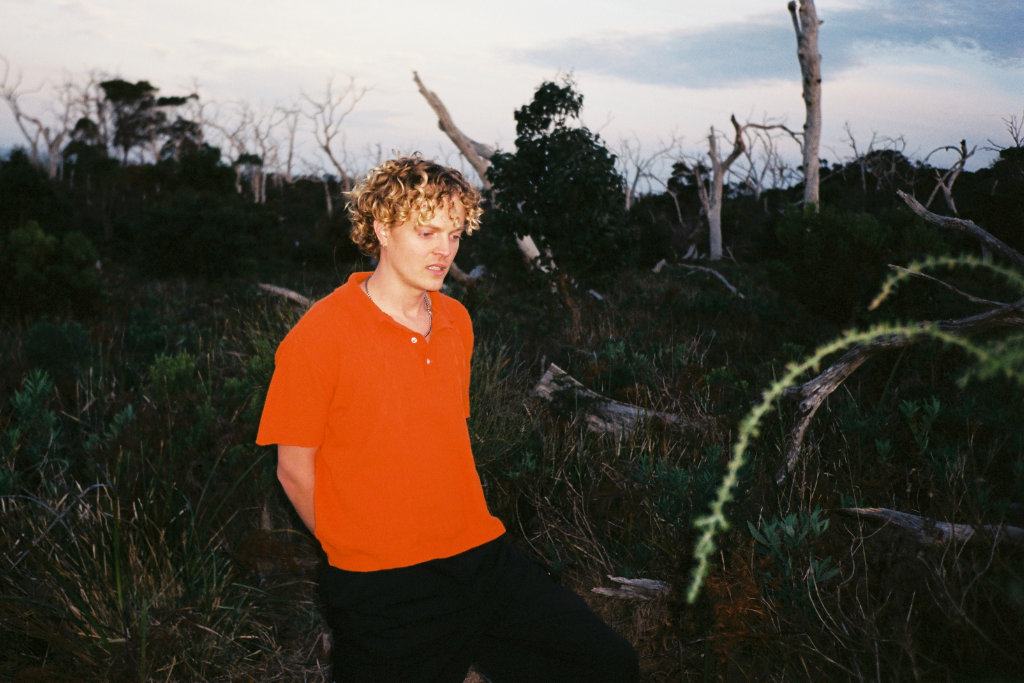
The Numbers: Keeping Count
DAVID NICHOLS reports on the life and times of an Australian band.
Between 1978 and 1984, Sydney group The Numbers plied their trade on the basis of the very smart and snappy songs of guitarist Christian Morrow and his younger sister, bass player and vocalist Annalisse. Two albums, seven singles and roughly a hundred drummers later, the group were dropped by their label and split up. In 1991 the Morrows came back, briefly, for a shorter stint as the Maybe Dolls, while recently, the Aztec label released a Numbers retrospective, Numerology.
You grew up in the Sydney suburb of Thornleigh.
Annalisse: We grew up in what would have been the outer suburbs, in a developing suburb. Our parents chose the area because there was access to public schools and high schools which were very good, and we grew up playing cricket on the street and racing billycarts down the road and all that sort of thing, and at the very end of our street, because it was only tarred up to a certain point, was a dirt road and then it went into the bushland, which was great, it went right through to Lane Cove. And you could walk from where we were, through the bush, it probably took you a couple of hours. So it was a great area to grow up in, it really was, you knew everybody in the street, all the kids played together, we walked to school, you didn’t have to catch a bus and it wasn’t dangerous to walk by yourself.
Chris: If you go way, way back, there was a railway line up through there and it was all orange groves, and then it became sort of a subdivision and that’s where we grew up. I haven’t been back there for ten years, now the road goes straight through it and it’s got giant supermarkets and Pizza Huts and Kentucky Fired Chickens and stuff like that – but when we grew up it really was the ideal Australian, suburban, goin’ down the bush, walkin’ to school kind of upbringing.
Annalisse: I think it was when I was 14 or 15 they put through the rest of the road so it linked up with the rest of the North Shore. Where Warrawee is, and Turramurra, you could then drive straight through and it took five minutes rather than half an hour to drive around, and once that went through – all that childhood growing up and playing cricket on the street was immediately taken away, and we had this four-lane road out the front. The public school is no longer there anymore, it’s now a BBC hardware. I drive through there on my way to work now; it’s changed a hell of a lot. But yeah, a great area to grow up in.
What did your parents do?
Annalisse: Well, dad’s actually an industrial engineer. He worked for major companies like Qantas and Coca-Cola and Philips and all those sorts of people and he used to do a lot of industrial facilitation really, he had a lot to do with how the production facilities worked in the planning and maintenance of those, when he worked for Coca-Cola of course we got free Coca-Cola which was always great. And mum was a clerk, she worked full-time, and dad worked full-time, when I was in primary school and Chris was in high school, by then, and our grandmother used to look after us and be there when we got home, then mum and dad would come home.
Chris: Dad was actually a really good piano player, but of course that wasn’t his job. He was an engineer, worked for Qantas for a long time and he worked as a jeweller. He did have an artistic temperament, in that he was a really good musician and he was a jeweller and designed jewellery, and still up until quite recently was making jewellery but then, you know, he had a family so he worked as an engineer. So he played the piano at night – I can’t even pinpoint when I started, I had a little snare drum and I started playing along with him, and got a couple of other drums, and he said, “why don’t you get a bass and I’ll show you what to play on the bass”, so I got a bass guitar and played a bit with him, and we played at a couple of neighbourhood gatherings, that sort of stuff. And then from that I got into guitar and on from there.
Annalisse: He likes jazz and blues, and all the old 30s and 40s songs like ‘As Time Goes By’. Chris and I were very influenced by that, and he also played the classics really well too.
How did the two of you start playing together?
Chris: It was pretty simple, I played the drums, then I played the bass for a little bit, then I got the guitar, and then I started to learn a bit, and she was just around, and was listening to what I was doing and the bass guitar was there and I said, “here, if you put your finger there, and you pluck that, and you move it up there, when I change chords here.” And because she was basically musical anyway she had the timing, and so it just went from there.
Annalisse: He was my older brother, and of course you get influenced by your older siblings. He started playing the guitar. We both learned piano when we were growing up, he bought an electric guitar and then he bought a bass guitar. And he didn’t play that as much as the electric guitar and I snuck in and started playing the bass one day, didn’t know he was at home and he came in and I went, “oh shit, I’m in trouble”, and I wasn’t – he said, “hold it – do that,” and then he picked up his guitar and we started playing together. And then the guy across the road who was a teacher also played the drums in jazz bands, and he heard us and of course you know your neighbours really well, and so he brought his drumkit across and that’s how it all started. We wanted to go out and do some gigs, but he really couldn’t do that so we advertised for a drummer. We had microphones and foldback systems, all in the lounge room. So that was really good. So that was really good and occasionally dad would come in, hit a few notes on the piano, and we told him to go away…
When did you start writing your own material, Chris?
Chris: Straight away. The main thing I did when I learnt to play the guitar, this was in ’69 or something, 1970, I think, because I remember I bought the classic nylon string acoustic guitar, you know, you go up to Hornsby and you have classical guitar lessons, which basically – if you’re not persistent, that’ll kill your interest in playing guitar straight away, there, you know what I mean? You’ve got some guy teaching you how to play obscure Spanish guitar licks, when all you really want to do is be the Kinks. So anyway I got through that, and a guy taught me a bit of rhythm and blues guitar, and then I had a copy of [The Rolling Stones live album] Get Your Ya Yas Out, so I used to play that through the radiogram, and I had a little pickup that you could clamp on to an acoustic guitar, and I figured out how I could plug it into the stereogram at the same time as I had Get Your Ya Yas Out playing, and I could play along with it. On from there, you know. The main thing was that mum and dad let me, and encouraged us, I think that was the key; we were allowed the time and the space to do it.
Was it always the case of Chris writing the songs?
Annalisse: Yeah. He had such a good grasp on the English language, and he not only can write really well but he speaks really well. He also has a much better memory for facts and figures, things like that, I tend to remember things like when he jumped through the stage and hurt his knee. And I remember the first outfit my mother bought me when I did my first gig. I have a visual memory, and that’s basically how I learnt to play guitar. I’m dyslexic, I learn visually, and by listening, and that’s how I taught myself to sing, I listened to other singers, and then I’d imitate them, and same with guitar, I’d imitate, once I’d learnt it, it’s like I’d have to learn it by heart and then I’d turn it into something of my own. So I’m a different kind of learner, there is a word for it…
Chris: I was obviously focused on myself and writing and writing and writing, and bringing new stuff to the band. Towards the end of the Numbers, Annalisse was maybe beginning to write and then when we didn’t work together for a period of time, of course she was writing. But then again the stuff I brought to the band, she contributed to anyway – she had to sing it, so…
So as you developed musically, your parents were supportive.
Chris: They just sort of made it like it was a normal part of life – if you wanted to express yourself artistically you did that. At school I was mainly dedicated to art; that was just like a natural progression, for us. It was just something you did naturally. I was never aware that it was an enormous privilege to be able to pursue painting, or pursue music – there was music permeating every single inch of the house, and that’s just what people did.
Annalisse: Dad soundproofed the lounge room, and mum always had sandwiches and tea and coffee, and then Dad would bring home a sound meter from work to make sure we weren’t disturbing the neighbours, and they bought us our first amp for Christmas, and they were really good feedback, because we’d come out of the lounge room and they’d go, ‘that’s a good song, which one is that?’ So we had the drumkit set up in there. I think they bought us our first amps because we actually blew up the stereo system… like you do. Mum was very good at choosing the singles, and they used to come and watch us play, which was great. Mum was shorter than me so we put her up on the lighting desk, because it was up above the crowd, she would be standing up next to the lighting guy having a lovely time, Dad’s six foot three, and he used to stand down in the crowd, but then there’d be a huge circle around him because they all thought he was a plain clothes policeman, ‘cause he’d turn up in his tweed coat and his tie looking very stern and blond and… “that’s my dad!”
The Numbers’ first release was an independent EP called Government Boy, with the title track sung by Chris.
Chris: It was about being a kid who went to a government school. I guess it was really – I wrote that with Marty Newcombe, who was the original drummer in the band – that whole working class thing. Through Marty we met a guy called Arch Brown and Denis Long, and Arch worked with what was called the Blacktown Music Co-Op. I think it might have been one of those initiative things through Blacktown council, or it might have been just a group of ordinary citizens. At that time the whole “hey anybody can put out a 7” single” mentality was burgeoning, and you could do it yourself to get a record out and get some recognition so during that whole period that was taking place in the western suburbs. We did two or three gigs for the Blacktown Music Co-Op and Arch put us in the studio to do the EP. He was really instrumental in the band’s early career, and he was the band’s tour manager for a long time after that.
You and Arch Brown wrote a musical.
Chris: It was the time at which you didn’t get laughed at if you said the words “rock opera’. It seemed like a good idea to write a group of songs around one subject and the subject of course was a government boy, although ‘Government Boy’ wasn’t part of it, living in Blacktown. And what it was like in Blacktown, the cultural wasteland that it was, but beneath that industrial wasteland there was gold. There were great people, great times, camaraderie, kitchen sink drama type stuff. So we wrote about the girls you’d meet a party – the song ‘Blacktown’ is about Blacktown. We even wrote a song called ‘Dad Can I Have the Car?’ There wasn’t a developed script, we got up to about ten songs. And then it got swept aside as the band’s momentum picked up.
Annalisse went from being a musician in the band to being pushed out front as the singer.
Chris: It’s your first band so you’re not aware those kinds of decisions eventually have to get made, especially when it’s just your sister, and I’m just her brother, it just takes off – people are going to prefer one person’s singing over another. So yeah it did start off I was singing the stuff and then we did the first EP and then that changed when we got into the studio and made the first album. You probably couldn’t even say that was down to a particular faction or person or group of people, events just happened. It didn’t work out with me singing the first single (‘The Modern Song’, March 1980) so she sang the first single and – it’s just a weird thing. You’re young and you don’t know a big decision is being made around you. Just by the fact you’re going along and following suggestions. Then when it does come clear you’re not the singer anymore – that’s when you stop and think ‘I’m not sure how much I like that, or don’t like that…’
Annalisse: You’re young and you’re taking advice from other people. And by that stage we were with a major label and we had a manager and we were with an agency and those people have a very large influence on how you think, because you’re taking advice from people you believe have the experience. And also personally I always thought I was a much better singer than I was a bass player. I thought I kept good time and I was a competent player, but I thought I sang a lot better than I actually played. I spent more time on developing my voice. Because that was very important to me as a female, and because that was an era when women’s lib was quite a big thing, there were very few females in the music industry, and you had to be three times as good as any male to be taken seriously. My musicianship, to actually be taken seriously, because I thought of the band as a unit – Chris was actually and had always been the leader, and not to say that we both don’t have ideas together, but he had a much better overview and developmental skills of where the band should be going and how things should go together than I did then. And possibly through the Maybe Dolls as well.
Chris: If I’d insisted on singing those things, who knows, the little success we did have maybe we wouldn’t even have had that. At the time those things certainly hurt, but once you get a bit of a distance away from the heat and the light of it, you become a little bit more… When I look back on it, so much of it was hit and miss, and luck and wrong place, right time, wrong haircut, right haircut… you’d know that from talking to thousands of other bands. You ask them what the hell happened and they’ll go, ‘Jesus, I don’t’ know, some stuff happened, and here we are!’
Some people would say Annalisse was picked out of the three just by dint of being the pretty girl.
Annalisse: And the selling product. From the record company side of things, that was very much on their minds. Because they don’t see you as a musician they see you as a saleable product. Saleable or not saleable. And they go for the angle that they think they can sell. So you take some of that on board and you can’t help but be influenced by that, but I wanted to be considered an equal amongst my peers. I also had my own ideas of how I thought I should sing, I definitely didn’t want to be a girly singer. I grew up with the Rolling Stones and Mott the Hoople and all those people, and David Bowie, and I wanted that sort of voice, I didn’t want it because I didn’t want to sound like a girl, I wanted it because I liked his voice. Do you know what I mean? I liked the tonal value of it, I liked what he could do with it and I wanted to do it as a person. I wanted to do it that way. As a person I don’t really like very girly voices, I know that sounds awful and I apologise to all the females out there but I sometimes find that they’re not really trying to find their full potential. I was also influenced by Chrissie Hynde and also Joan Armatrading. But because of their quality of voice and what they could do with it. The warbling that Chrissie Hynde could do, you know how as a singer you can do vibrato – I could never get that, I don’t know how she did, it was amazing! The quality of her voice and the tones she gets had a big play on me as well and Joan Armatrading’s voice, her range was incredible, and also the way she expressed herself as a singer. Those things are the qualities I looked for in singers – because I’m a visual person, I wanted texture and depth and tone, you could say it was the elements and principles of sound, and that’s what I was looking for. I felt like I was part of the band, and I very much wanted to be because it was Chris and I together and we complimented each other because he was very good at where we were going, and the direction, and then I was good at the job that I did. I allowed myself to be put up the front but on our terms if you know what I mean.
Tell me about the situation with the Deluxe label. They were promoting themselves as a new-wavey label, but didn’t last long. Three of the bands managed two albums on the label – what was the vibe?
Chris: We had a residence at this place called the Alley Cat wine bar in North Sydney, and around the corner from that was Chris Murphy’s – he’d just left Premier booking agency and he’d set up his own agency, MMA. He was looking for bands, and it was that kind of golden age of pub rock so there was money to be made just in playing live, he was looking for bands and he came around and saw us play at the Alley Cat, and started booking us, and previous to that we were doing support gigs for Mi-Sex and stuff like that. Michael Browning came back from America after splitting with AC/DC, wanted to start a label, met Chris Murphy, and at that stage we had a residency at the Civic Hotel in the city, and Michael Browning came around and saw us and said yeah he’d sign us.
Annalisse: He was taking a huge gamble in setting up something as major as that, because there were a lot of little independent labels, but he had a bit of finance and the right connections basically. We were in good company with INXS, the Dugites and Toy Love.
You did have two hit singles, Countdown appearances – how weird was that?
Annalisse: It was exciting and weird. When ‘Modern Song’ came out we had great big billboard posters around the city and NSW and that was the weirdest thing driving down the road and seeing this huge thing of you and your brother and Simon [Vidale, drummer for the first album] and you just go, ‘oh my god’. So suddenly it’s there, and it’s real and people have huge opinions about whether that was a good idea or not, it was a huge risk to take, and so yes, you get all that attention, and although you’ve been working in the industry a few years before that and developing yourself, the audience and the people who listen to music, in the majority of cases it’s the first time they’ve heard or seen you, so suddenly a lot of people are very interested in you, and you’re not prepared for that – you want to be successful, and you want as many people as possible to listen to your music, because that’s very important to you, but with that comes a whole lot of other things as people want to know you, and they want to know you personally, and they want to know the band. And they’re going to buy the records and love the music.
Was your biggest hit ‘Five Letter Word’ really about the five-letter word ‘death’?
Chris: I thought it was pretty obvious that’s what the song was about, it’s a nihilistic song about death. The ‘five letter word with no human remains’, and it’s about that quasi-Jim Morrisonesque fascination with death. “This is perversion, this is diversion”, that’s about life itself, it’s pretty straight ahead.
How do you feel about the first album?
Chris: I haven’t listened to it since it was made. I was really disappointed by it when it came out. It’s sort of missed it for me. But then, coming back to it now, I’m actually surprised by how good it is. Some of it’s shite, but some of it’s really good.
It did come and go really quickly. The feeling I got then was the record company’s expectation was we were going to go absolutely ballistic. We were going to go from suburban Thornleigh to Madison Square Garden, we were going to be amazingly huge. And when that didn’t happen, it was like the record company had a sulk, and that was it. But I think that’s pretty common with record companies. The second record was good; I listened to that again recently. I really had more time to learn how to work in the studio. We were working with Buzz Bidstrup, this was his first big production thing where he had some money, he was enjoying himself and learning and developing and trying new stuff and he was enthusiastic. It was great to be working with someone who was so supportive artistically, we could sit in the studio for a couple of nights listening to 18 different guitar takes, putting them on, taking them all off. So there was that latitude, whereas the first album was, “finish the gig, get into the studio, you’ve got twelve days, you’ve got to do this, we’re doing all the vocals, quick, yeah yeah yeah, that’ll be fine now we’ll put some…” there was no time. When it got to the end it was like I had no control of it, hadn’t settled in, none of the songs sounded like I wanted them to sound. That was a combination of my inexperience and not enough time.
"Globalisation has changed everything – yes, we can be in touch with everyone all over the world ... but it’s also put dampeners on co-development if you know what I mean. We think globally, which is fantastic, but we don’t think nationally, and we don’t support the talented people we have in this country".
You copped flak for putting out a first album that ran for just under half an hour, so you named your second album, 39.51, after its running time. That’s weird.
Chris: I distinctly remember discussing the album, because we had singles and we had b-sides, and we’d only had enough time to do the bare minimum of tracks we needed, and we had this long discussion about would we put the b-sides on the album as well, and it was that punk mentality – you got in, you played your songs, you didn’t play 14 choruses at the end, economy of everything, you didn’t have long boring guitar solos, you got in and you got out. We even contemplated not putting the singles on it, which would have been suicide, so that was where that came from. That’s why we did it. When you think about it in isolation, naming an album after its running time isn’t a bad idea.
When the Numbers ended in 1984, you both flirted with solo careers.
Chris: It got to the end of the Numbers, we did the last tour with Simon, which was quite amazing, and then that finished so the band went our separate ways, and I had new stuff so I was just continuing writing, and I wanted to get a deal for myself, so Deluxe and BMG, or RCA as they were, had dropped us, so I didn’t have a recording deal but I was still signed to Deluxe publishing, so I bought my way out of the publishing deal, then started doing demos, then I financed some demos. The guy who did sound for The Numbers was a guy called Mitch Ross Jones, and he had a band called Scattered Order, and he had a record label called M2, so I did a deal with Mitch and started cutting demos. I was doing a lot of work with tape loops, I was recording lots of stuff on half-speed on tape machines, speeding them up into tape loops, so I did those demos, and I got interested in that sampling/Fairlight scene and making records, and working with this computer company in Glebe – so I did a demo of ‘Just What I Needed’ on that, using it as a test bed for this computer program. That was another really interesting period too, getting into the early computer stuff, sequencing, coming from that tape loop area. It was a bit of a Frankenstein monster, you set off on this idea to do something and it transforms into something else. You put the electric charge in it and it gets up off the table and it gets up and walks around and you go, ‘shit, that’s ugly isn’t it.’ It works but it’s fuckin’ ugly.
Annalisse: I did work on a solo career, but it didn’t happen. I was actually writing, on my own, and I was also looking at doing covers. I did a whole lot of singing, jazz and blues, and did a lot of theatre. I went and studied acting for a couple of years, and I was in Shout! The Johnny O’Keefe story, a television movie. I was Laurel Lea, that was a major speaking part – for me, not for anyone else in the thing. And I did cabaret, and I did some dancing, which is embarrassing but that’s OK. At that stage there were groups of dancers going around performing – I had a friend who was a choreographer and I used to work with her quite a bit, and then I worked with her on fashion shows – I’d do all the organisation with her, so I went off and did a whole lot of other things. Singing jazz and blues was fantastic. I just did that in winebars and restaurants. That was nice, it was just piano and voice.
The two of you came back and flirted with the idea of calling yourselves the Numbers again but then decided on the Maybe Dolls – how different was the industry?
Annalisse: It’s a bit the way education’s going, much more corporate – incredibly corporate. And Australian record companies actually don’t have a lot of say in the way they run if they’re affiliated with another company overseas, they don’t have a lot of say in who they sign and how they sign them. They really have to look at, well, “great musicians, can we sell them, are we going to make money out of this, is the mother company going to be happy with that, and can we sell them overseas, because now we’re globalised, we’re a local branch of something”, globalisation has changed everything – yes, we can be in touch with everyone all over the world and share information and technology, but it’s also put dampeners on co-development if you know what I mean. We think globally, which is fantastic, but we don’t think nationally, and we don’t support the talented people we have in this country.
So you’re bitter about the Maybe Dolls experience?
Annalisse: No, I think we were more prepared, actually. I might sound like I’m bitter but I just had more of an understanding of how things worked, maybe I’m more realistic about that. I think we went into the Maybe Dolls with open eyes, more, it didn’t happen the way we wanted it to happen, we still came up against the same types of things that we did in the Numbers, but I think we handled it really well. Again, I was sorry to see it finished – I couldn’t listen to music for about five years. Not because of bitterness – it was just really sad for me.
What went so wrong?
Annalisse: The record company wanted us to do certain things, they were just a branch of much larger corporation, they needed to meet their goals, so they had to re-look at what they were doing, that whole thing about supporting your local people went out the window, it was “we have to change what we’ve got here”. The end of the contract came up, you go into renegotiate the contract, where you’re thinking you’re going to get something along the same lines as your last one, which is single plus album, and they came back and said, “sorry, no, only single. And if single goes well, we’ll give you another single. And if that goes well, we’ll give you an album.” So they couldn’t take chances anymore, and that made it very difficult for us, because we thought, they don’t believe in us anymore. I think people were being pressured from both sides. We did go to other record companies – we’ve actually got enough songs for two more albums that never got released. The album contract finished the night before we were meant to go in and do the film clip for the next single – and the single never got released. That was very, very disappointing, and very frustrating, so we took all that to a new record company which liked our music but because we came with baggage as far as “well, if you want these guys you’re going to have to pay the old record company this much money for the tracks”, they weren’t willing to do that. So consequently we continued on, we did some more live work but because we couldn’t get the support, and because we couldn’t get the release, we just – we had no alternative but to stop.
Chris: The music industry had changed a bit – though there was the same kind of mindset there always was, “quick quick, let’s sign the next big thing just like the last big thing”. It was the beginning of the era we’re at the height of now, the beginning of the package deal: “I’m a songwriter/producer, I either play music or know musicians, we’re going to put this together, we’re going to get a girl singer to come in who’s really spunky, we’ll put this together as a package and we’ll promote it.” That was the atmosphere of the industry. The band had quiet a long genesis in terms of where it came from, and it was into that era of “don’t put anything out” and “let’s send them to LA to work with famous American producers”. We’d made releasable material two years before, but didn’t release when we should have. So before it even got out a lot of water had flowed under the bridge. That’s what the industry was like: the art of the deal.
Annalisse: And I think also too from a female point of view I was over the age of 30, I also wasn’t a size 8 anymore, and I didn’t look like I was 14 anymore, and that was a huge factor in saleability on my part.
You didn’t look old at all!
Annalisse: We’ve got our parents’ genes – my mum looks ten years younger than she is. Chris looks younger than me, but he’s actually older than me! But the second time around we weren’t allowed to tell anybody how old we were!
People have very fond memories of the Numbers.
Annalisse: It’s interesting you should say that, I never thought we were a hugely successful band, not that I didn’t enjoy what we did, I really did, but a lot of people have very fond memories of us, and it’s really nice to hear that, because we didn’t hear that when we were going through all that.
+
to listen to their music now on